Your piano roadmap for success
What to learn when you’re first starting out…

1: The Layout - Octaves, Semitones, Sharps & Flats
The layout of piano gives the clearest visual on how music is structured. The note names span from A to G before repeating. The pattern of black notes - 2-3-2-3 - up the entirety of the keyboard is how you navigate the piano. The white note situated directly before the group of 2 black notes is C - and if you know that, you also know what all the others are. If you travel from one note to the nearest note of the same name - C to C for example, either up or down - we call that distance an octave. If however we were to travel from any note, to the next nearest note - again, either up or down - we would’ve travelled a distance called a semitone, or “half-step” as they say in America. If you travel two semitones, we call that a tone (or whole step in America).
Now let’s get to the black keys. The way to think of the black keys is as variants of the white keys; in order to use a black key, you have to modify a while key by a semitone. A black key pitched one semitone higher than a white key is known as a sharp, and a black key pitched one semitone lower than a white key is known as a flat. So, if I’m on D, and I go to the black key directly above it, I’m on D Sharp, and if I got to the black key directly below it, I’m on D Flat. And it’s at this point, you’ve probably noticed something peculiar - that every black key is a semitone lower than one white key, and a semitone higher than another, meaning this D Flat is also C Sharp. There’s a technical term for this: enharmonic equivalents - two different names that refer to the same pitch of note. Sounds confusing at first, however, unlike the white keys, the names we give to the black keys don’t refer to the pitch itself, but to which white key has had to be modified to play that black key and how it’s had to be modified.
2: Simple intros from tutorials
Don’t worry about learning an entire song. Just start with the intro…
…plus many more across my socials
3: How to read sheet music
1: The Fundamentals
To articulate music in the written form, we use 5 lines known as the “staff”.
Each line and space within the staff relates to one of the white keys on the piano. Occasionally, we will encounter notes that are situated outside of these 5 lines - and in order to accurately articulate those notes, smaller temporary lines are drawn. These lines are called “Ledger Lines”.
Due to the fact that we use both our hands on piano, we need two separate staffs to organise what each hands needs to do, and we identify those two staffs using something called clefs. The treble clef shows you what the right hand needs to do, and the bass clef shows you what the left hand needs to do. The treble clef always sits on the upper staff, and the bass clef always sits on the lower staff. When the two staffs are combined, they form something called The Grand Staff, which looks like this…
Slurs:
The first note we need to learn the location of is a note called Middle C - so called due to the fact that it sits “in the middle” of The Grand Staff. “Where is Middle C on the piano?” I hear you ask. Well, if you’re using a 61 key keyboard, it will be the 3rd C up from the lowest. If however you’re on an 88 key piano, it will be the 4th up from the lowest C. On The Grand Staff, Middle C resides on the first ledger line situated underneath the staff on the treble clef, and the first ledger line situated above the staff on the bass clef.
From there, it’s quite straight forward to track our ascending and descending notes on each staff. For the treble clef, the white notes ascending an octave from Middle C would look like this…
For the bass clef, the white notes descending an octave from Middle C would look like this…
Now, if you’re looking at that thinking you haven’t got a hope in hell of remembering it, don’t worry - there are a couple of really useful hacks you can use. On the treble clef, remember that the 4 notes that fall in between the staff lines spell the word FACE. Also, the notes that fall directly on the staff lines of the treble clef - EGBDF - you can remember by reciting “Every Good Boy Deserves Fudge”.
You can also use this method for identifying notes on the bass clef - however you need to start from the first space underneath the lowest staff line to spell FACE, and you need to start from the first ledger line that would fall underneath the lowest staff line to recite “Every Good Boy Deserves Fudge”.
Now the foundations have been laid, it’s time to look in a bit more detail at some of the other elements you’ll find on a score…
Highlighted in green is the key signature. The function of a key signature is to tell you which white notes to modify and how to modify them for the duration of the song. In order to properly understand how it does this, we must first understand something about scales. For if you start on C, and you play all the white notes until you arrive at the next C, that is what’s known as a C Major Scale. Even if you’ve never touched a musical instrument before, the sound of a major scale will be very familiar and satisfying. And that’s because the notes are following a particular pattern. And that pattern is:
Tone - Tone - Semitone - Tone - Tone - Tone - Semitone.
Follow that pattern from any note, and you will have the major scale of the note you started from.
If we go up to F, and follow that pattern, the first tone takes us to G, the next tone takes us to A - and then all of a sudden, we find that travelling a semitone will see us need a black key. “Is that A Sharp or B Flat?” I hear you ask. Well, we’ve already used the natural variant of A, so that rules out using another variant. So, it has to be B Flat. From there, we travel another tone up to C, then another tone to D, another tone to E, before travelling one final semitone back to F. Therefore, following this pattern, we know that an F Major Scale has B Flat in it. On the score, that would look like this…
Notice the symbol next to the B - one that bears a passing resemblance to a stylised lower-case b itself. That symbol tells you what note you need to modify by flattening it.
Let’s quickly try another scale. Starting from G this time, we’ll travel a tone up to A, then a tone to B, then a semitone to C, then a tone to D, a tone to E - before finding that once again, sticking to the pattern of the major scale requires us to use a black key. A tone from E takes us to F Sharp, before the final semitone resolves the scale at G. Therefore, we know that a G Major Scale has an F Sharp in it. On the score, that would look like this…
That hashtag-looking symbol next to the F tell us which note we need to modify, and that we need to modify it by sharpening it. Seeing these scales on the score like this gives a really clear indication of how we distinguish between enharmonic equivalents. Seeing an ascending scale, and how a variant of each note is used, really helps us to understand whether we need to sharpen or flatten a note in order to make it fit within the major scale structure.
Key signatures are a shorter and simpler way of articulating this. By including a number of flat or sharp symbols just after the clefs, you know which white notes to modify and how to modify them for the entirety of the song - alleviating the need to have flat or sharp symbols next to every note that need modifying.
A “key signature” is not to be confused with the “key” of a song. Take the two scales we’ve just looked at as prime examples. When we wrote the F Major Scale, the “key” was F Major - but the “key signature” would’ve shown a B Flat. This flat symbol would sit on the B-Line of the score just after the clefs, and would tell you to flatten every B you play in that piece. Same with the G Major Scale - the key is G Major, and the key signature features an F Sharp.
A key signature will never feature both sharps and flats - only sharps OR flats. And when you do see one or the other, they will only ever appear in a certain order. For flats, the order is B-E-A-D-G-C-F - or as I like to remember it, “bead-good-cup-final”. For sharps, this order is simply reversed: F-C-G-D-A-E-B. But as long as you remember the order of the flats using “bead-good-cup-final”, you can backtrack on that when working with sharps.
Finding the key of a song using the key signature depends on whether the key signature uses sharps or flats. In a key signature using flats, you find the key by going to the last but one flat. So if you see 3 flats, the 2nd flat is the key. Those 3 flats would be B, E, and A - in that specific order. A Flat is the last flat, E Flat the last but one, therefore the song is in E Flat Major. Conversely, if we knew a song was in the key of E Flat Major, we would know that E Flat is the 2nd flat, therefore the song uses 3 flats.
If we knew a song was in the key of D Flat Major, we’d know that D Flat is the 4th flat, therefore the song uses 5 flats - with every B, E, A, D, and G in that song being flattened. And if we saw those 5 flats on a piece of sheet music, we’d know that G Flat had to be the last of those 5, therefore D Flat had to be the last but one - meaning the song was in D Flat Major.
In a key signature using sharps, you find the key by going to the last sharp used, and then going up 1 semitone. So on a staff showing 2 sharps - which could only be F and C in that order - we got to the last sharp, C Sharp, and go up 1 semitone to D. Therefore, the song is in the key of D Major. Conversely, if you knew a song was in D Major, all you’d need to do is travel a semitone down from D to C Sharp, and you’d know that was the last sharp in use. Knowing the order of the sharps, you’d know that C was the 2nd sharp, meaning the song uses two sharps - F & C.
If you knew a song was in the key of E Major, you’d travel 1 semitone down from E to D Sharp, you’d know that D was the last sharp used and the 4th one that can be used, meaning all the Fs, Cs, Gs, and Ds in that song are sharps.
All in all, every key signature and subsequent key will look like this…
It’s worth mentioning that the reason flats and sharps fall in the order they do - and correlate to the keys they do - is to keep the tonal and semitonal structure of the major scale firmly in place. But in knowing how keys and key signatures work, it gives you the ability to not have to track where you are and what you need to do by constantly reciting “tone, tone, semitone, tone, tone, tone, semitone”. It’s a shortcut. The only key that features no sharps or flats is C Major - as you might’ve guessed from the absence of any black keys in its scale.
The next thing we need to familiarise ourselves with is the time signature - highlighted in blue in the above image. A time signature is like a musical clock that tells you how many beats are in each bar. Looking distinctly like a fraction, you will find the time signature written immediately after the key signature. The top number tells you how many beats are in each bar, and the bottom number tells you what type of note is being used to measure how long a beat is.
For example: a time signature of 4/4 tells the player that each bar features 4 beats, and each beat is the length of a quarter note - meaning 4 quarter notes, or their equivalent, will fit within a single bar of 4/4. Bars are separated by bar lines - highlighted in teal - where the count begins again. Another example: a time signature of 6/8 tells the player than each bar features 6 beats, and each beat is the length of an eighth note.
Time signatures are closely linked to the tempo - highlighted in red. The tempo tells you how many beats will feature in the song during each minute, and what type of note is being using to measure the length of a beat. Combining the knowledge the tempo and time signature gives us, we know that this particular song is being played at the rate of 120 quarter notes per minute (or their equivalent), and that each bar will feature 4 quarter notes (or their equivalent).
The image below shows all the most commonly used notes along with their durations.
As we can see, a whole note has a hollow note head, and no stem. A half note also has a hollow note head, accompanied with a stem. A quarter note has a solid black note head, along with a stem. An eighth note has a solid black note head, a stem, and a single tail. A sixteenth note has a solid black note head, a stem, and two tails. And finally, a thirty-second note has a solid black note head, a stem, and three tails. As you can see, all notes are easily distinguishable.
Knowing this, a time signature of 4/4 could accommodate up to 1 whole note, 2 half notes, 4 quarter notes, 8 eighth notes, 16 sixteenth notes, 32 thirty-second notes, or any combination that adds up to 1 whole.
Along with the note durations themselves, you also have corresponding rests that indicate moments where that hand need to stop playing, and how long it needs to stop playing for. The rest durations are as follows…
Occasionally, you will see a small dot situated directly to the right of a note or rest. This dot indicates that the duration of the note or rest is extended by half of its original value again. So, while a normal quarter note would be equal in duration to 2 eighth notes, a dotted quarter note would be equal to 3 eighth notes. Further examples are as follows…
Also relating to rhythm and duration are things called “ties” - brackets that combine the durations of two neighbouring notes.
When two notes are tied together, the duration of the second note is added onto the duration of the first - meaning you only physically have to play a single note rather than the two displayed. These two notes do not have to be the same duration individually - but do have to be the same pitch. A tie can cross a bar line, or it can occur within a bar. Here’s another example…
Octave Transpositions:
2: The Stuff That’s Handy To Know…
Beyond the absolute fundamentals, there are a number of things you’ll encounter where it pays to be prepared. One of those things is a “slur” - which as you’ll see from the below image, looks rather like a tie…
As you’ll be able to see from this image, a slur - unlike a tie - isn’t limited to being used between two neighbouring notes, and neither do the notes at either end of the slur have to be the same pitch. Instead, a slur can stretch between any number of notes, and any number of bars, between any two different notes. When you see a slur on sheet music, it indicates that the notes within it should be played as smoothly as possible.
Something you’re also going to encounter are Octave Down or Octave Up brackets. These engulf any number of notes and transpose their pitch by an octave - either up or down, depending on the bracket. Their purpose is to make reading notes easier by avoiding unnecessary ledger lines. Here’s an example of an Octave Up Bracket…
As you can see, the “8va” with the bracket situated above the notes is what indicates to the player to transpose these notes up by 1 whole octave. If the score was instructing a player to transpose the notes down 1 whole octave, the bracket would be underneath the notes, and the lettering would read “8vb”, like this…
In the event of needing to transpose notes by 2 whole octaves, the lettering would read “15ma” for transposing up, and “15mb” for transposing down, like this…
You may also find special clef symbols are used when the song requires you to transpose longer passages. The most common of these is a treble clef with a number 8 underneath it, indicating that everything played on that clef needs transposing down an octave.
If the 8 was above the treble clef, that would indicate that everything played would need transposing up an octave. These rules also apply to the bass clef.
Another useful way of avoiding excessive ledger lines - and something that players need to look out for - is when you find two of the same clef on the grand staff. For example…
While 99.9% of the time the upper staff will only feature a treble clef, and the lower staff a bass clef, sometimes it’s necessary to use a treble clef on the lower staff, and a bass clef on the upper staff. Remember: the upper staff is always the right hand, and the lower staff is always the left hand - regardless of which clefs are used.
Accidentals:
Another thing you will encounter occasionally are accidentals - when a flat, sharp, or natural symbol is placed next to a note to alter it’s pitch by a semitone. The alteration will be one that isn’t indicated in the key signature itself, and will last for the duration of a single bar only.
As we know, a sharp raises the pitch of a note by a semitone, and a flat lowers the pitch of a note by a semitone. A natural however takes a note that has already been altered - one that’s either been sharpened or flattened by the key signature - and removes that alteration. Here’s 2 examples using different key signatures…
As we can see, the upper staff is in the key of E Flat Major - which requires every B, E & A to be flattened. As the B is naturalised, for that bar and that bar alone, you would need to raise the pitch of the B Flat by a semitone to B Natural. The lower staff however is in D Major - where all Fs and Cs are sharpened. As the C is naturalised, for that bar and that bar alone, you would need to lower the pitch of the C Sharp by a semitone to C Natural.
Triplets & Tuplets:
A tuplet is when the beat is divided up into an irregular number of notes. The most common type of tuplet is a triplet - which as you’ll be able to determine from the name, divides a beat into 3 equal parts. Normally, when playing with a 4/4 time signature, each beat is divided into 2, 4 or 8 parts. Dividing the beat into 3 parts creates an exotic sense of irregularity that is very noticeable in songs.
As you can see, each group of notes here represents 1 beat. The quarter note represents a beat; by dividing it into 2, you have two eighth notes; by dividing it into 4, you have four sixteenth notes. By dividing it into 3, you end up with three triplet eighth notes - as indicated by the “3”. As these triplet eighth notes take up the same duration of time as two regular eighth notes, they are naturally played slightly faster - but not as fast as sixteenth notes.
While triplet eighth notes are the result of dividing a quarter note into 3, triplets can be used to divide any note value. For example: if you were to divide a half note into 3, you’d end up with three triplet quarter notes. Like this…
You could also divide a whole note into three triplet half notes, like this…
Other varieties of tuplets divide notes into other irregular parts. Given that notes can normally be divided into 2, 4, or 8 parts, other variants of tuplet are used to divide notes into 5, 6, or 7 parts. Here are some examples…
All of these examples fill the same duration of time - 1 beat in this particular example, The sky’s the limit when it comes to how many different variations of tuplet you can have. As intimidating as they might appear, as long as you’re familiar with the tune of the song itself, you can use your ear to guide you when you encounter one. Don’t overthink them - just let you fingers follow your ear’s direction.
You’re now armed with all the information you need in order to conquer the sheet music in front of you. If you’re a complete beginner, follow on from here to the Level 1 beginner songs listed below. If however you have some experience, head on over to my full sheet music catalogue and pick some of your favourites to learn.
Beginner Sheet Music - In Order of Difficulty
-
Level - ★
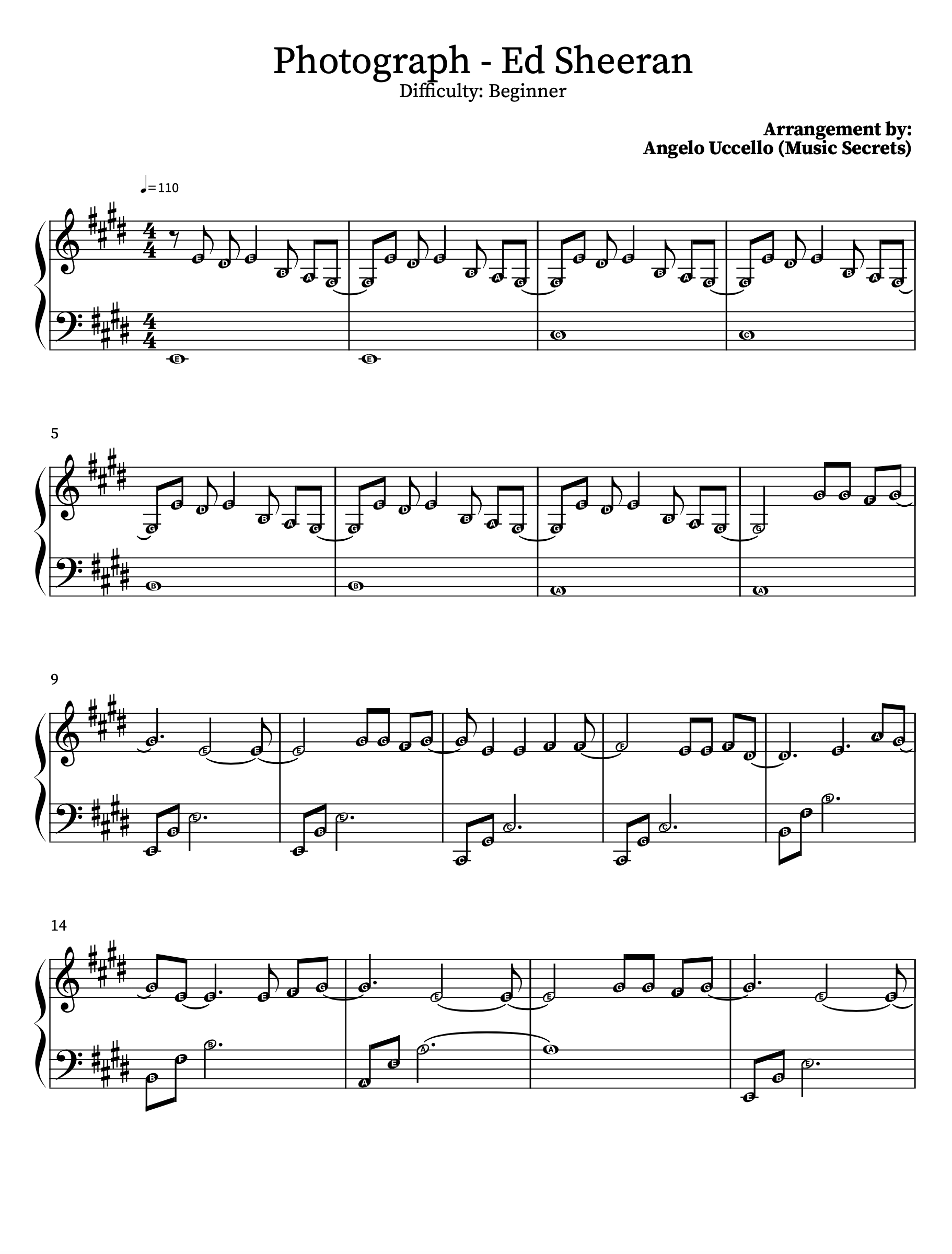
The music secrets & transferable skills this song teaches are…
•Root & Fifth Octaves - & how to transition between them smoothly.
•The easiest way to play a melody.
•How to recognise when a song repeats to make learning easier.
-
Level - ★
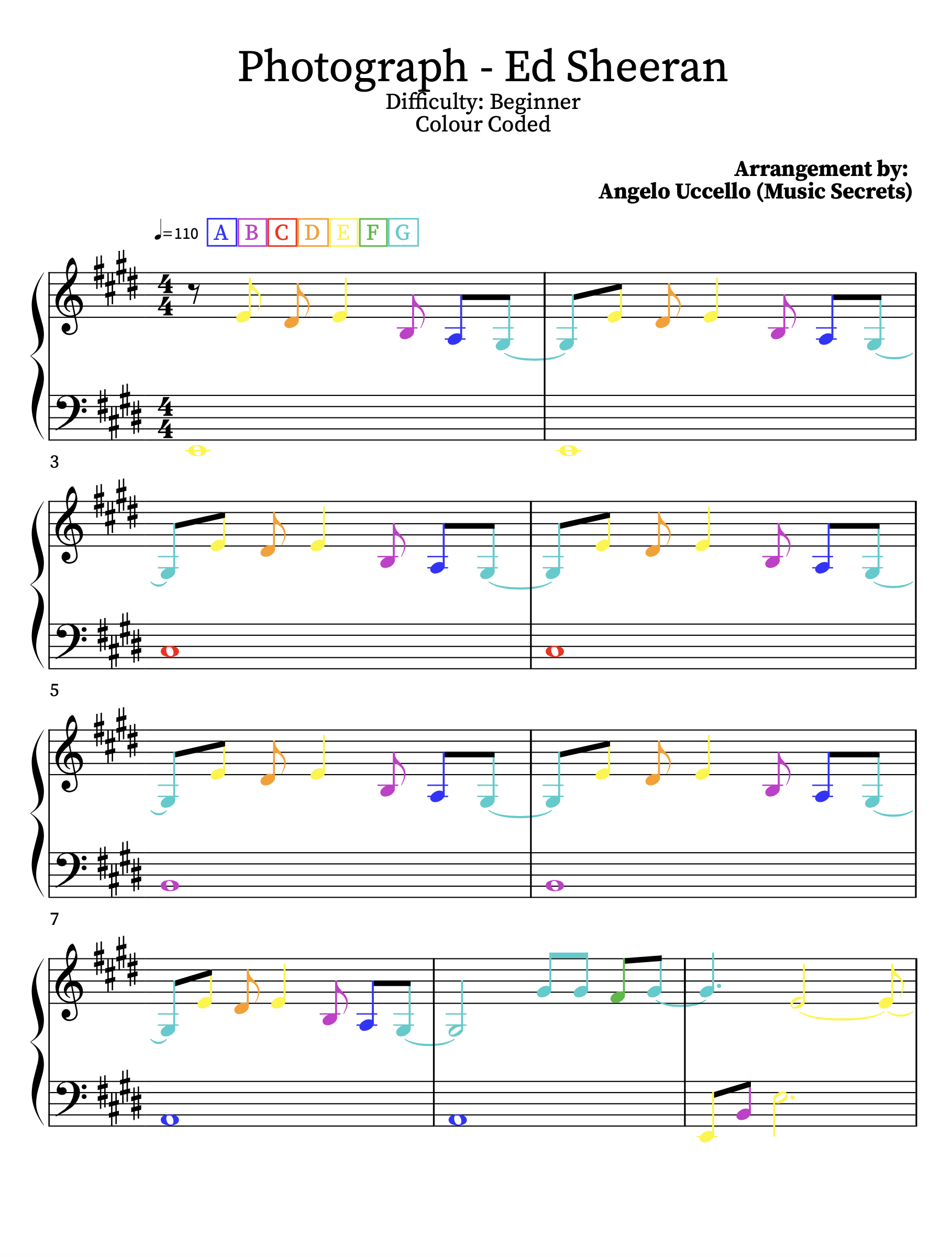
The music secrets & transferable skills this song teaches are…
•Root & Fifth Octaves - & how to transition between them smoothly.
•The easiest way to play a melody.
•How to recognise when a song repeats to make learning easier.
-
Level - ★
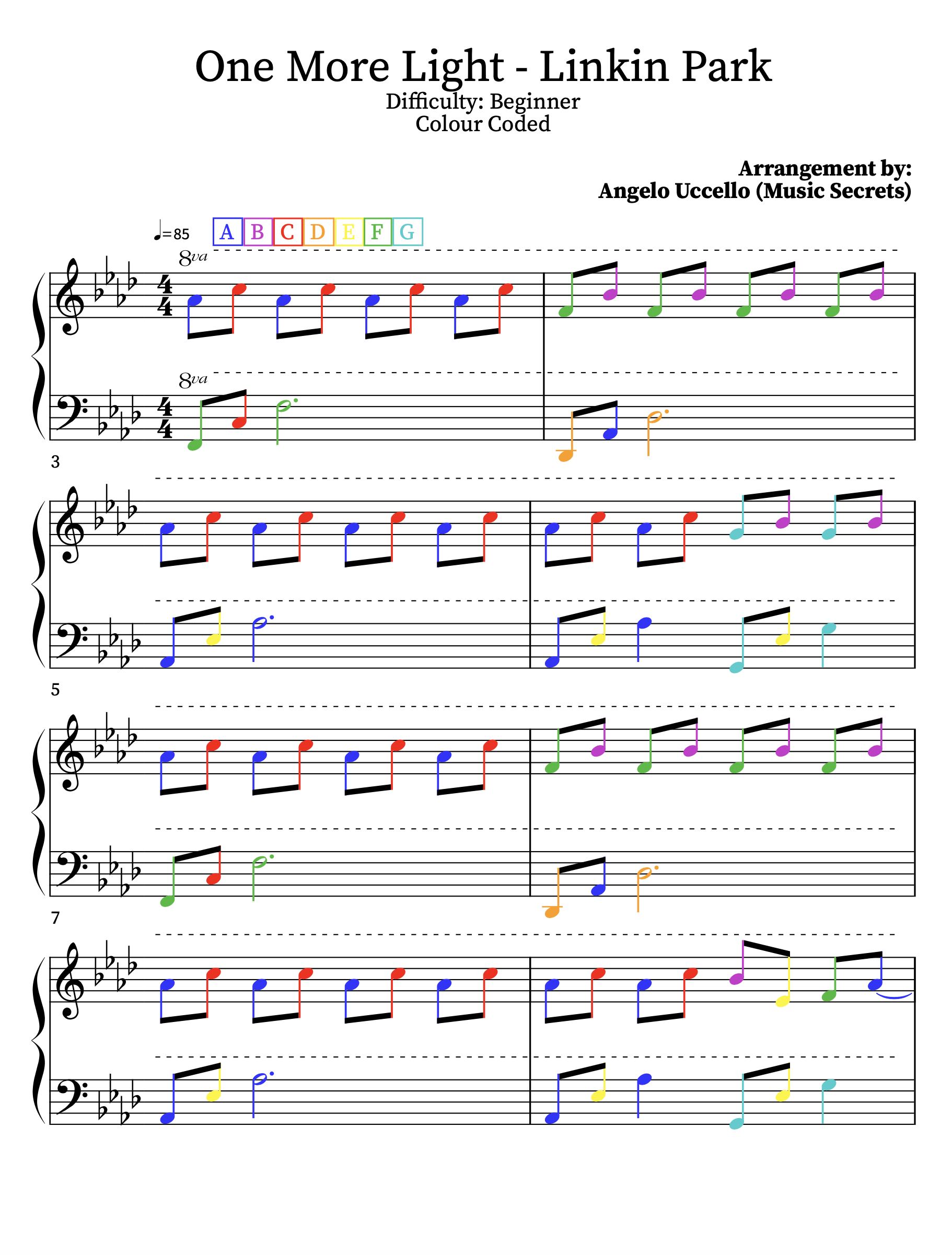
The music secrets & transferable skills this song teaches are…
•Root & Fifth Octaves - & how to transition between them smoothly.
•The easiest way to play a melody.
•How to recognise when a song repeats to make learning easier.
-
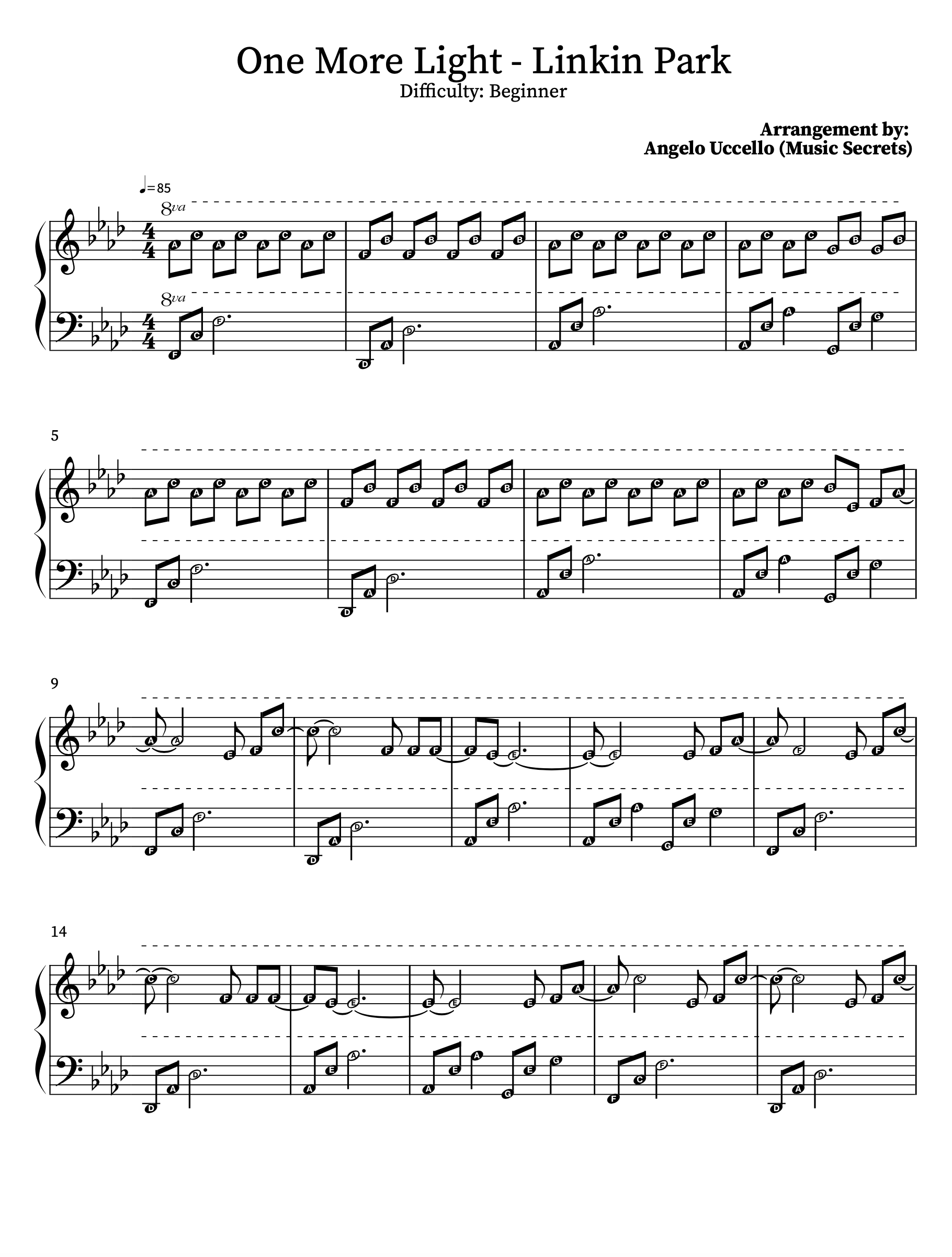
Level - ★
The music secrets & transferable skills this song teaches are…
•Root & Fifth Octaves - & how to transition between them smoothly.
•The easiest way to play a melody.
•How to recognise when a song repeats to make learning easier.
-
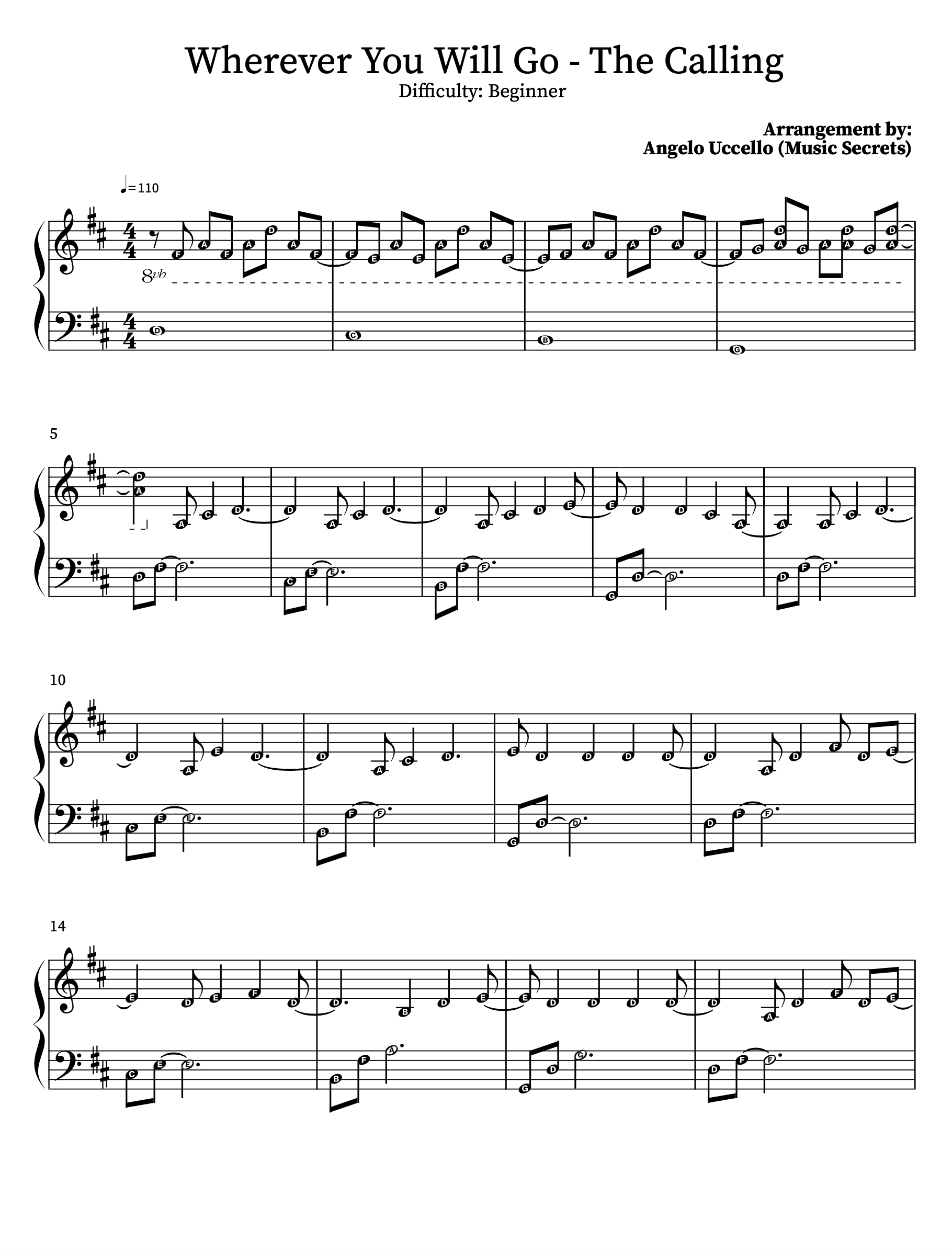
Level - ★
The music secrets & transferable skills this song teaches are…
•Root & Fifth Octaves - & how to transition between them smoothly.
•The easiest way to play a melody.
•How to recognise when a song repeats to make learning easier.
-
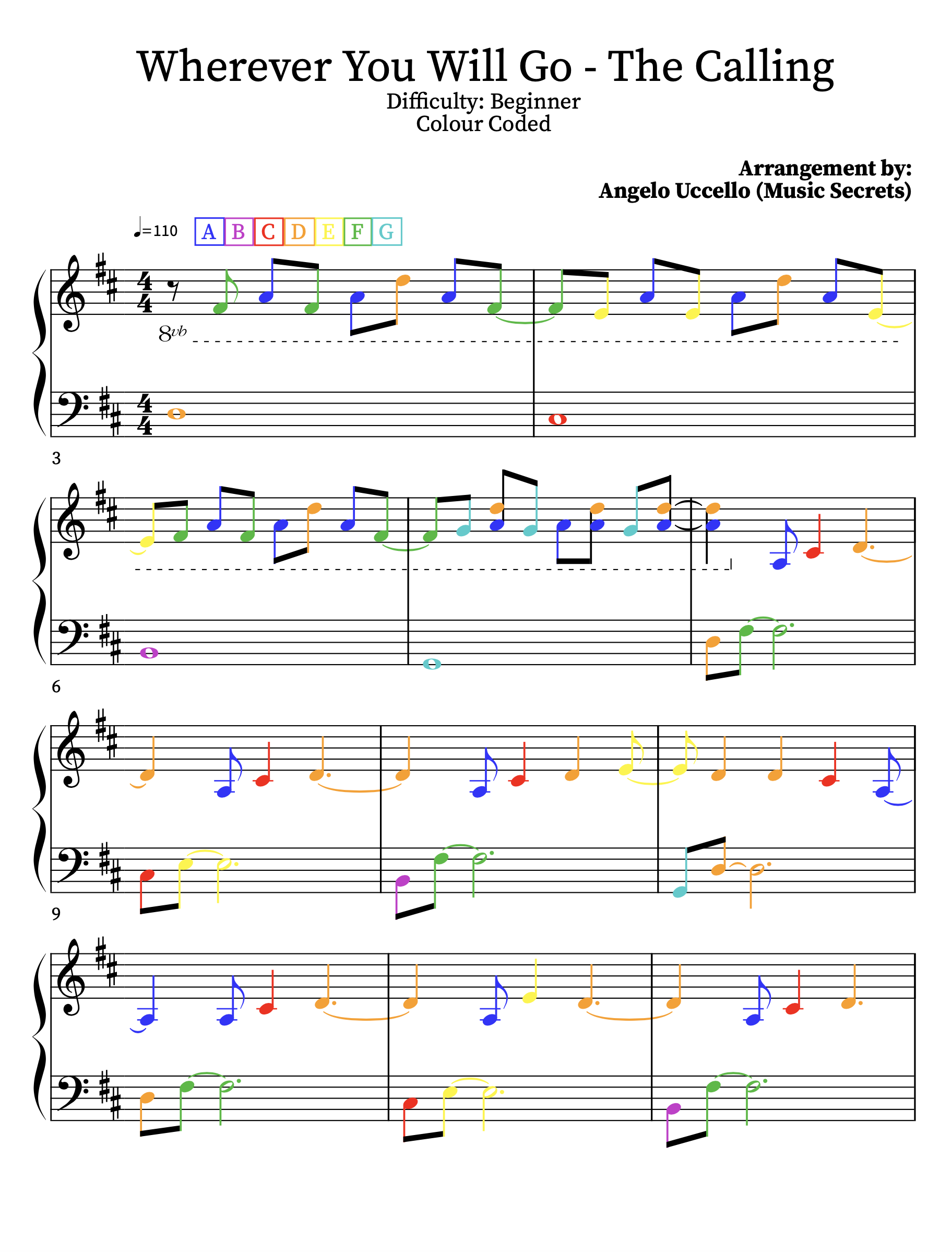
Level - ★
The music secrets & transferable skills this song teaches are…
•Root & Fifth Octaves - & how to transition between them smoothly.
•The easiest way to play a melody.
•How to recognise when a song repeats to make learning easier.
-

Level - ★★
The music secrets & transferable skills this song teaches are…
● Roots & Fifth Octaves - & how to transition between them smoothly.
● The easiest way to play a melody.
● How to make learning easier by recognising repeats.
● An introduction to 16th notes.
-
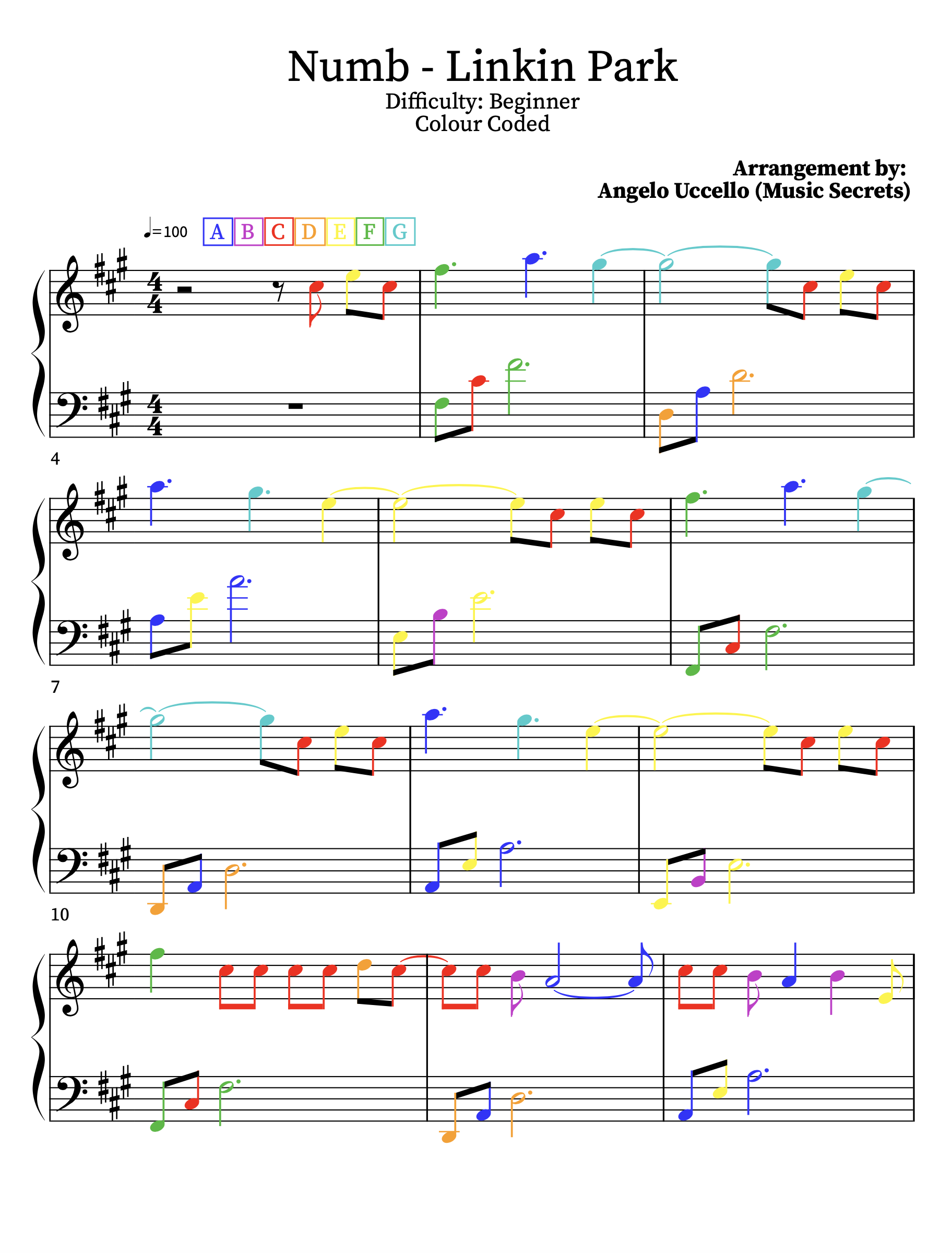
Level - ★★
The music secrets & transferable skills this song teaches are…
● Roots & Fifth Octaves - & how to transition between them smoothly.
● The easiest way to play a melody.
● How to make learning easier by recognising repeats.
● An introduction to 16th notes.
-
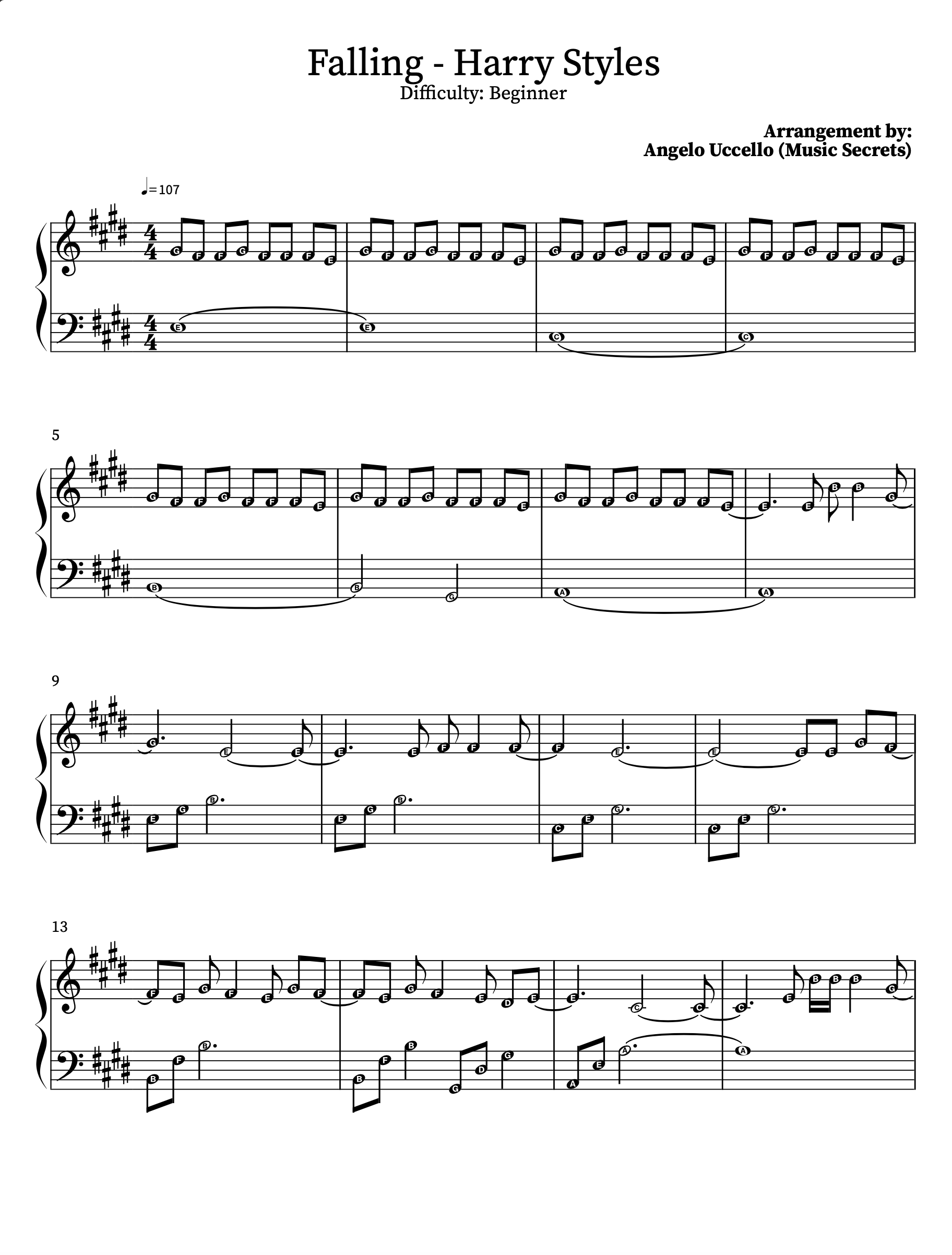
Level - ★★
The music secrets & transferable skills this song teaches are…
● Roots & Fifth Octaves - & how to transition between them smoothly.
● How to play Root & Fifth as a chord rather than merely in succession.
● The easiest way to play a melody.
● How to make learning easier by recognising repeats.
● An introduction to 16th notes.
-
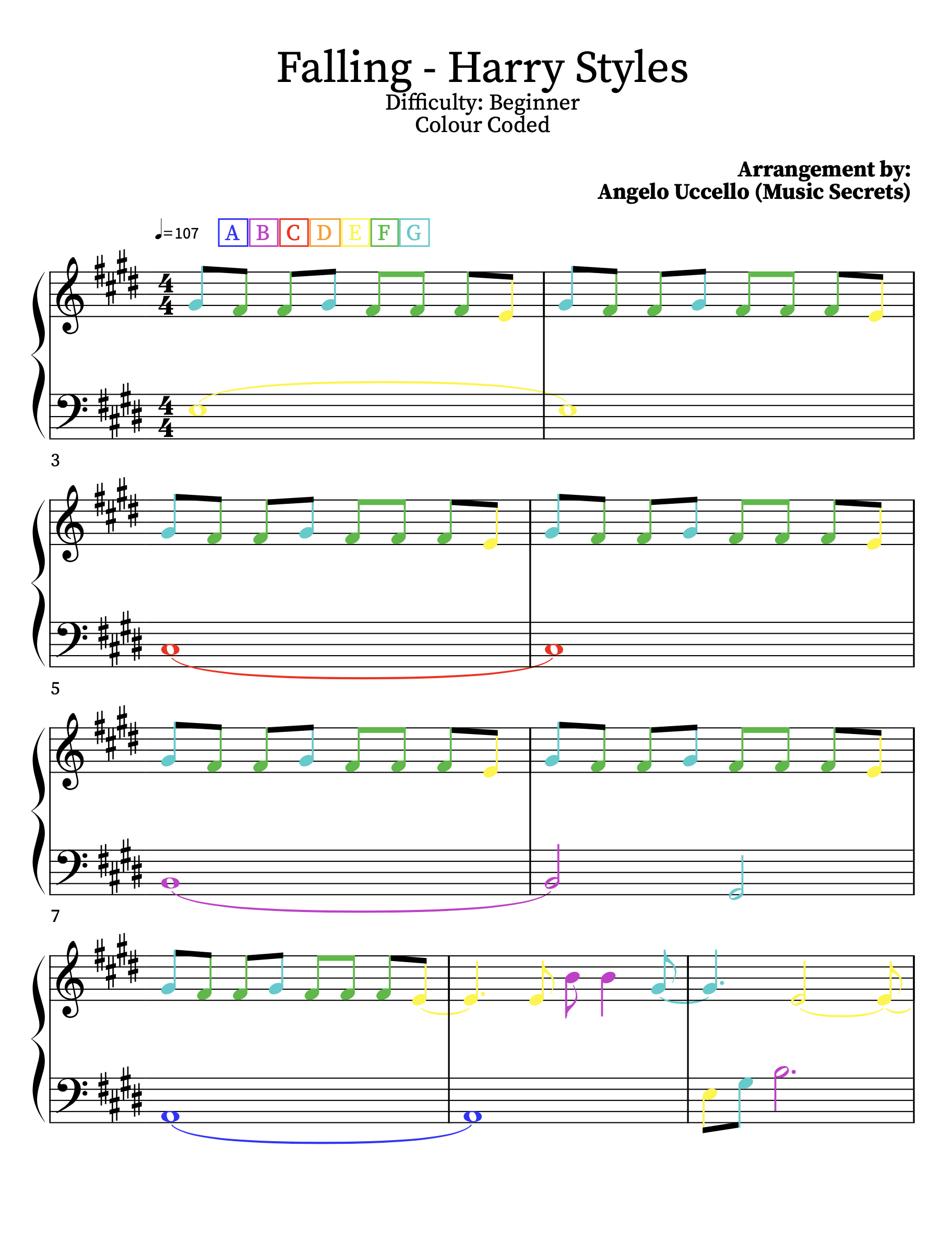
Level - ★★
The music secrets & transferable skills this song teaches are…
● Roots & Fifth Octaves - & how to transition between them smoothly.
● How to play Root & Fifth as a chord rather than merely in succession.
● The easiest way to play a melody.
● How to make learning easier by recognising repeats.
● An introduction to 16th notes.
-
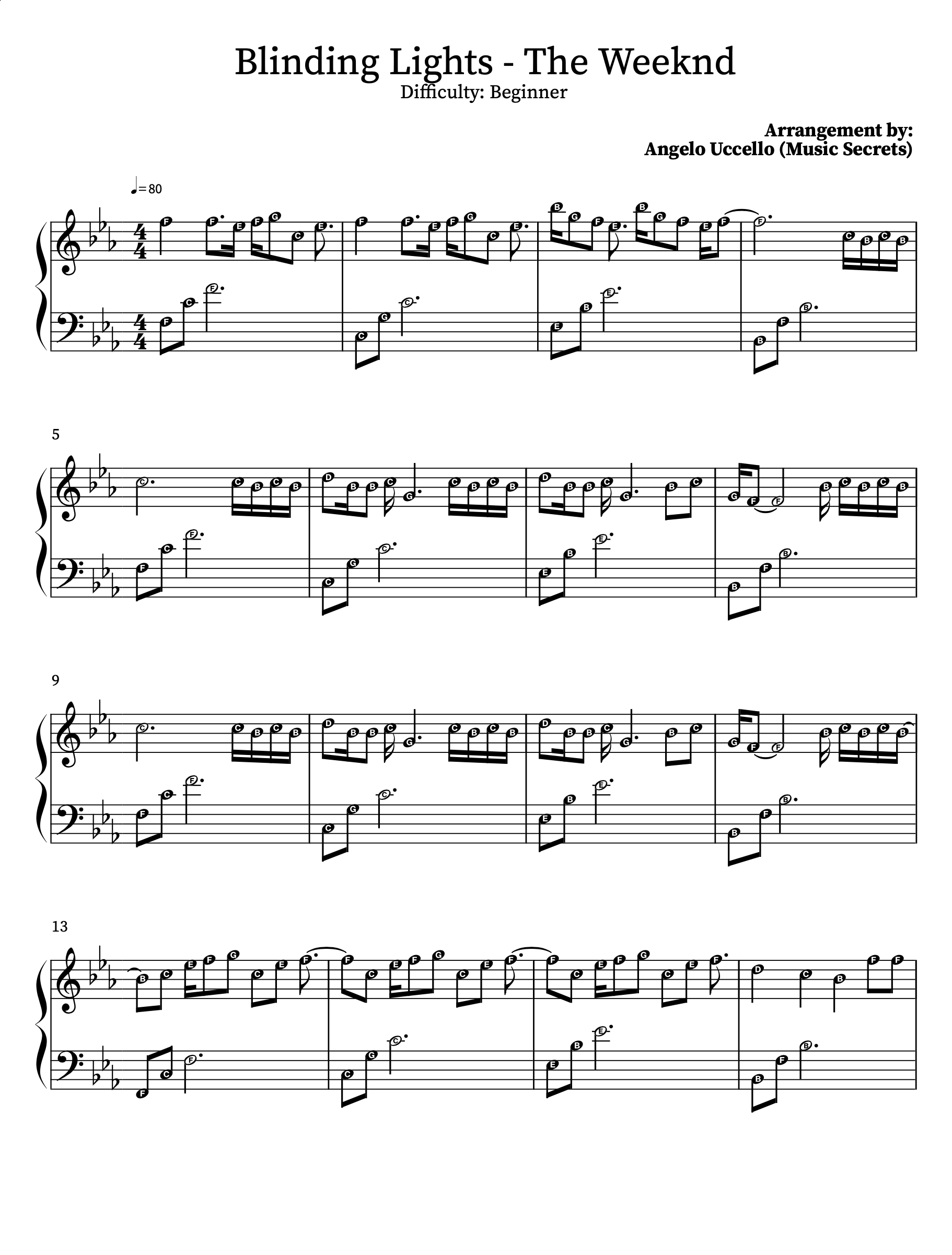
Level - ★★
The music secrets & transferable skills this song teaches are…
●Roots & Fifth Octaves - & how to transition between them smoothly.
●How to play Root & Fifth as a chord rather than merely in succession.
●The easiest way to play a melody.
●How to make learning easier by recognising repeats.
●An introduction to 16th notes.
-
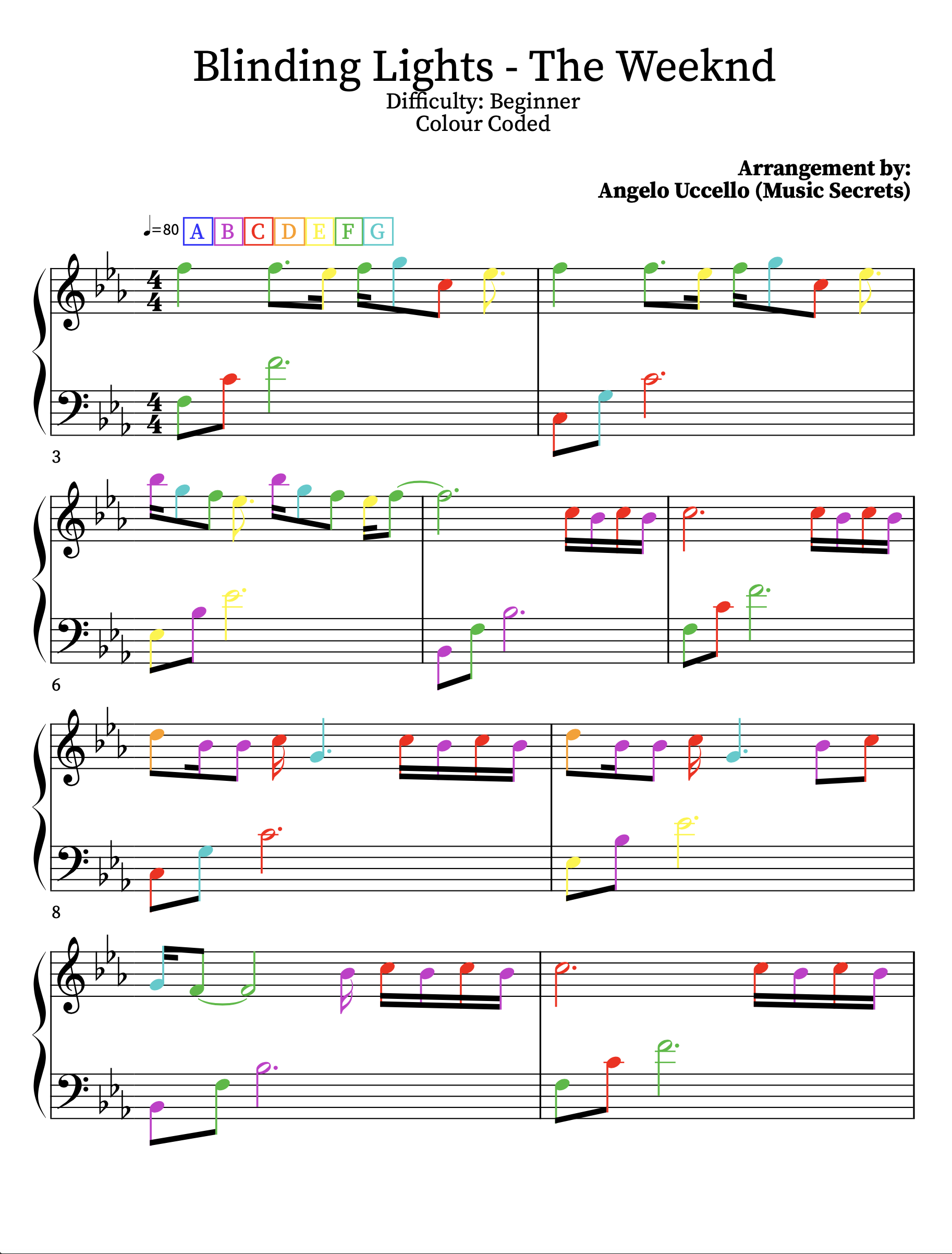
Level - ★★
The music secrets & transferable skills this song teaches are…
●Roots & Fifth Octaves - & how to transition between them smoothly.
●How to play Root & Fifth as a chord rather than merely in succession.
●The easiest way to play a melody.
●How to make learning easier by recognising repeats.
●An introduction to 16th notes.
-
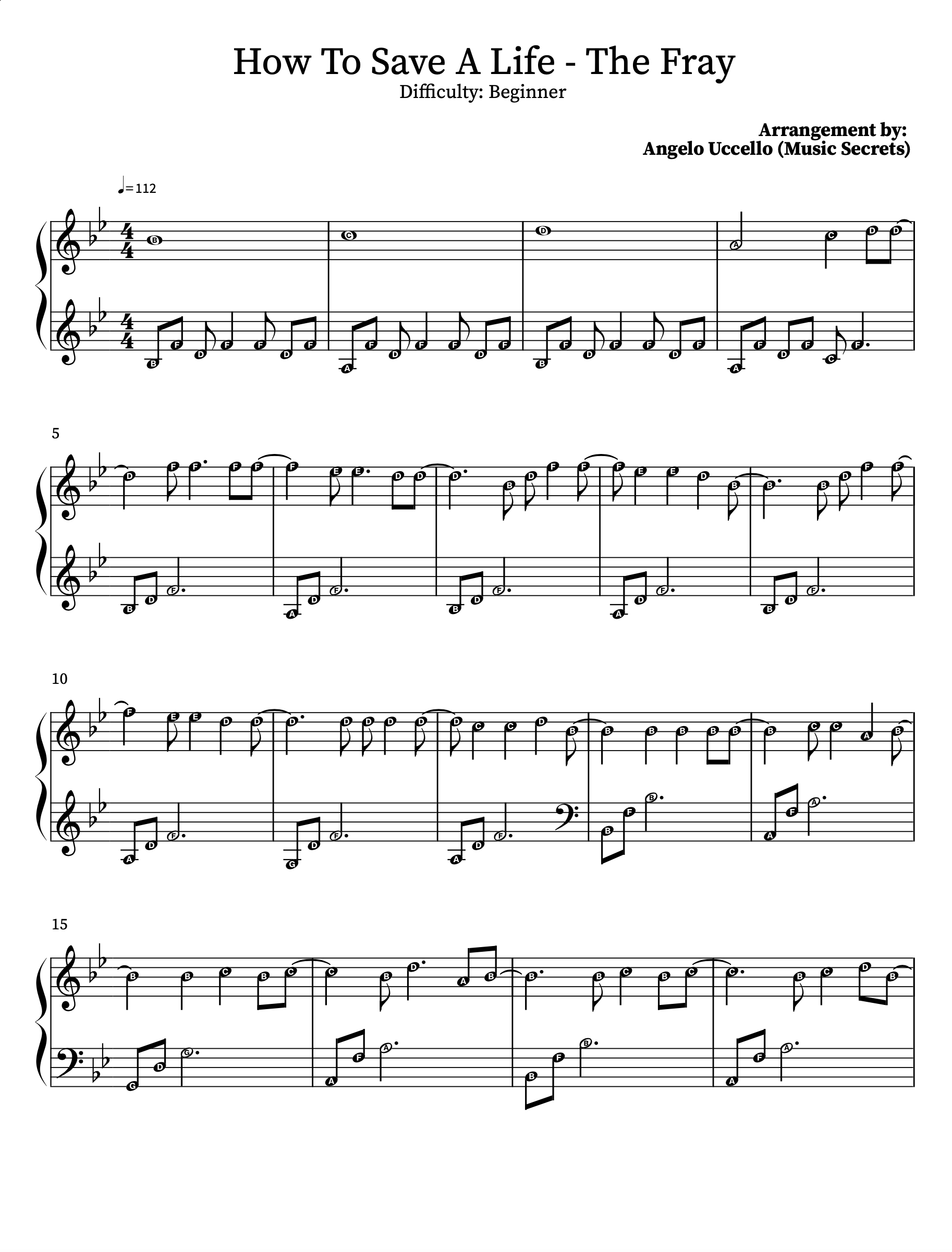
Level - ★★★
The music secrets & transferable skills this song teaches are…
● Roots & Fifth Octaves - & how to transition between them smoothly.
● The easiest way to play a melody.
● How to make learning easier by recognising repeats.
● Left hand revolving patterns.
-
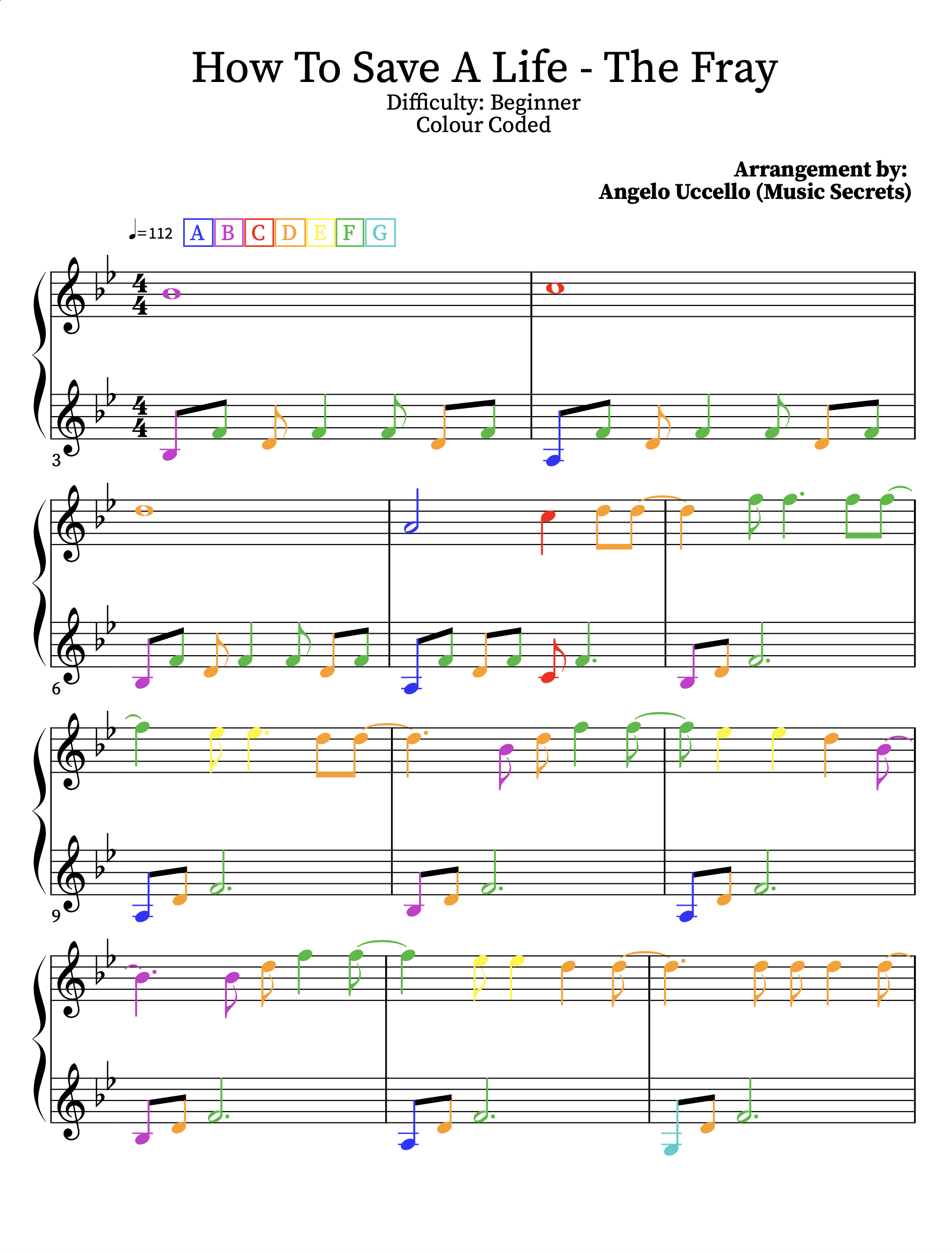
Level - ★★★
The music secrets & transferable skills this song teaches are…
● Roots & Fifth Octaves - & how to transition between them smoothly.
● The easiest way to play a melody.
● How to make learning easier by recognising repeats.
● Left hand revolving patterns.
-
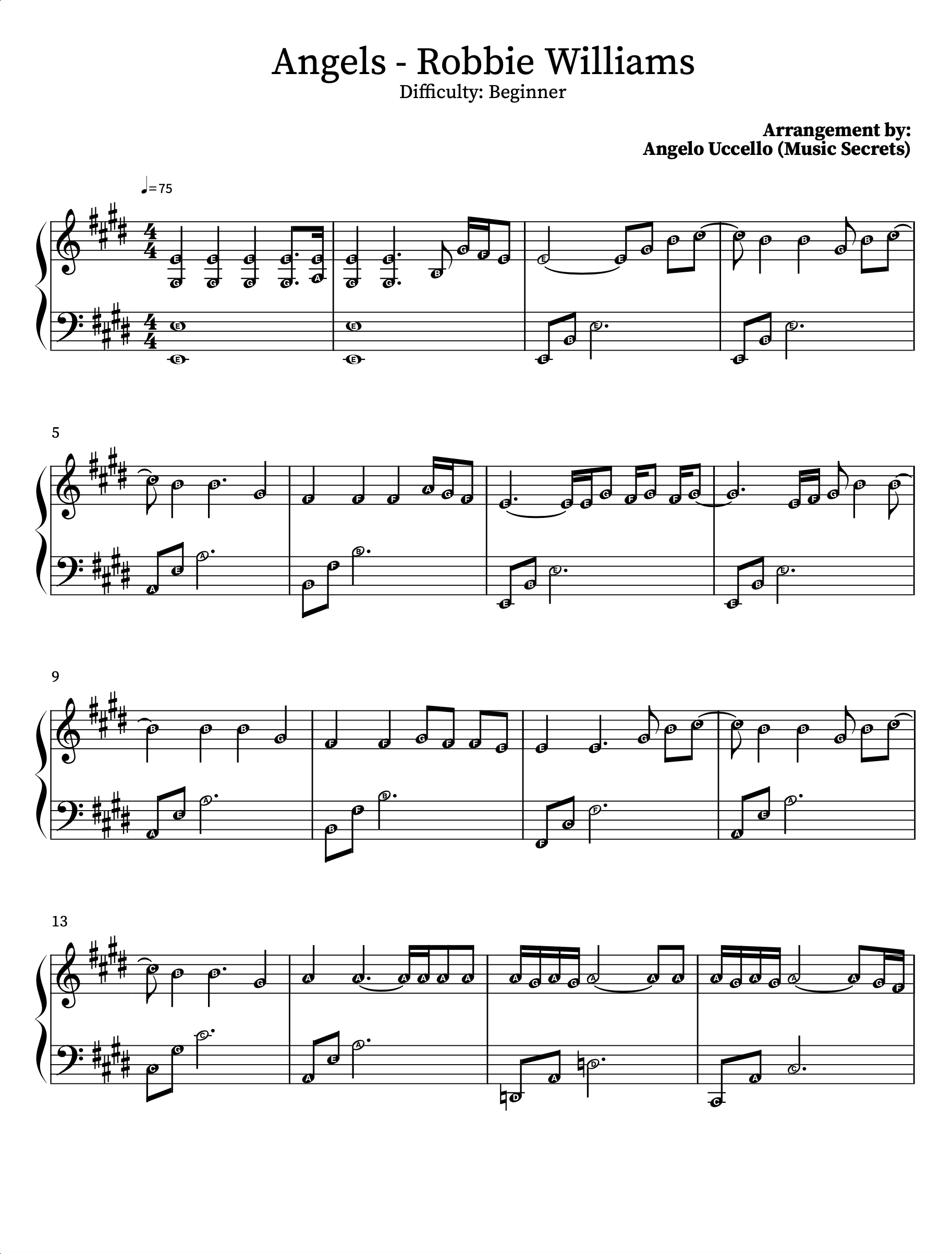
Level - ★★★
The music secrets & transferable skills this song teaches are…
●Roots & Fifth Octaves - & how to transition between them smoothly.
●The easiest way to play a melody.
●How to make learning easier by recognising repeats.
●An introduction to 16th notes.
●Introduction to accidentals.
●Introduction to basic right hand arpeggios.
-
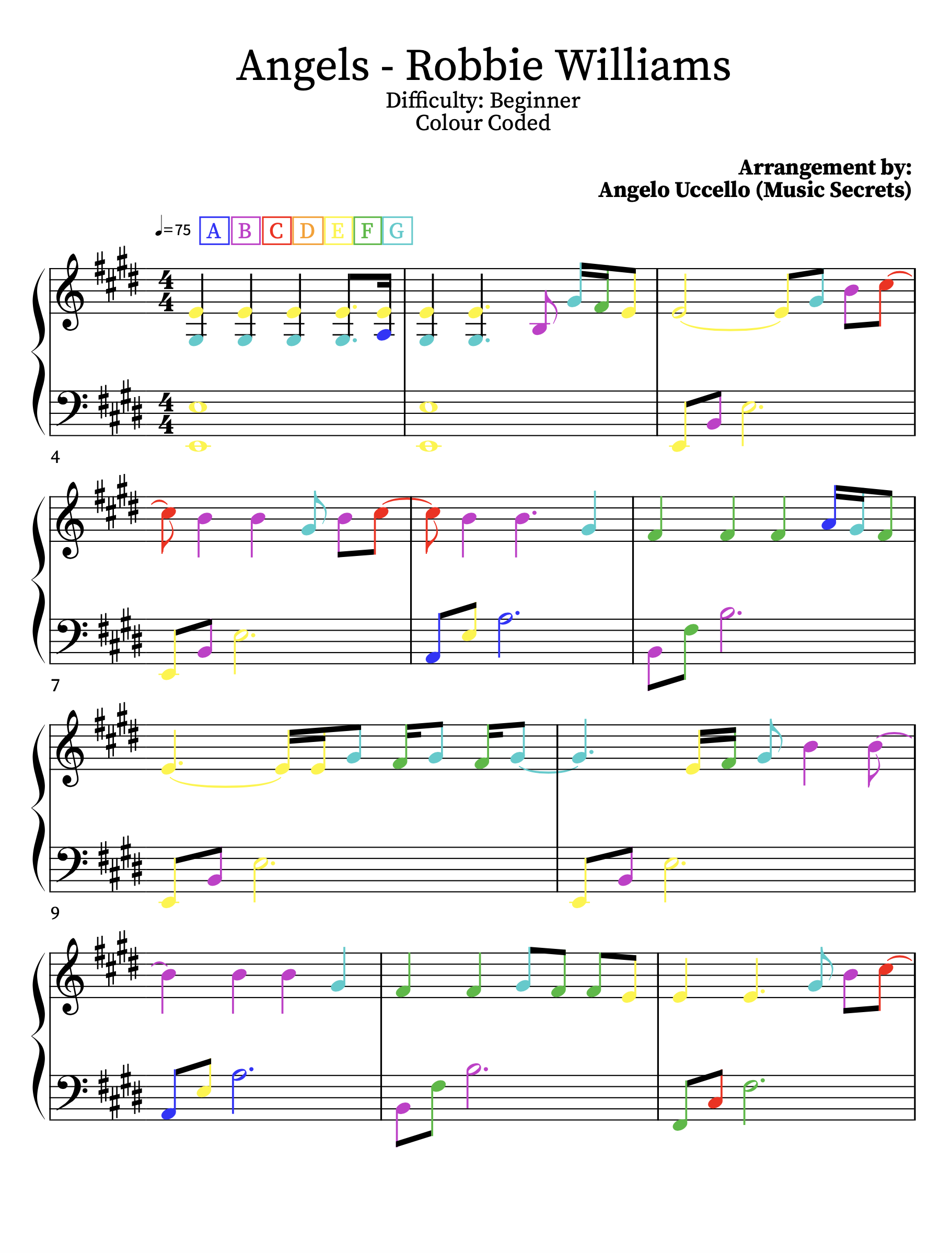
Level - ★★★
The music secrets & transferable skills this song teaches are…
●Roots & Fifth Octaves - & how to transition between them smoothly.
●The easiest way to play a melody.
●How to make learning easier by recognising repeats.
●An introduction to 16th notes.
●Introduction to accidentals.
●Introduction to basic right hand arpeggios.
-
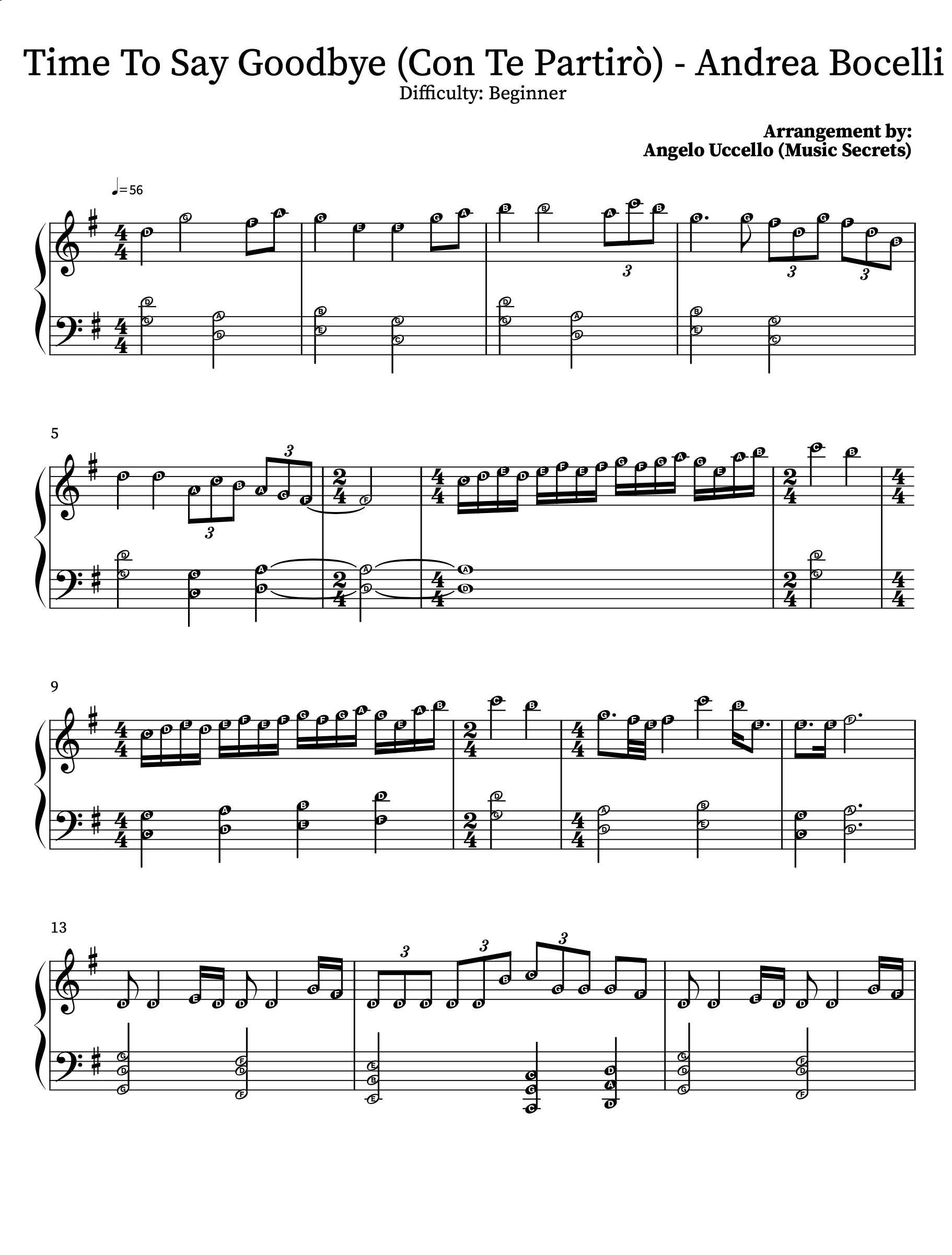
Level - ★★★
The music secrets & transferable skills this song teaches are…
● Roots & Fifth Octaves - & how to transition between them smoothly.
● How to play Root & Fifth as a chord rather than merely in succession.
● The easiest way to play a melody.
● How to make learning easier by recognising repeats.
● An introduction to 16th notes.
● How to play triplets.
● Introduction to Key changes.
● Introduction to accidentals.
-
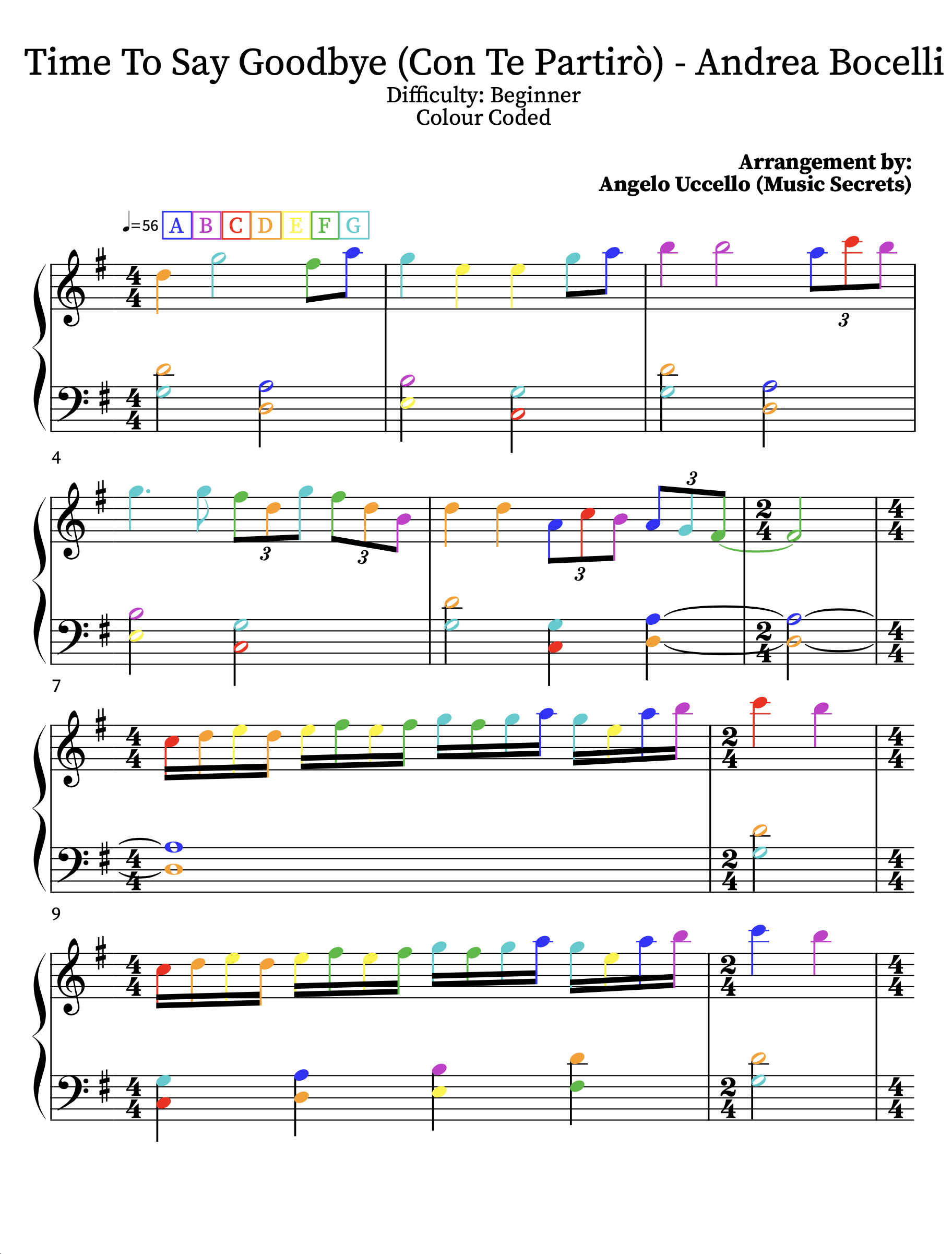
Level - ★★★
The music secrets & transferable skills this song teaches are…
● Roots & Fifth Octaves - & how to transition between them smoothly.
● How to play Root & Fifth as a chord rather than merely in succession.
● The easiest way to play a melody.
● How to make learning easier by recognising repeats.
● An introduction to 16th notes.
● How to play triplets.
● Introduction to Key changes.
● Introduction to accidentals.
-
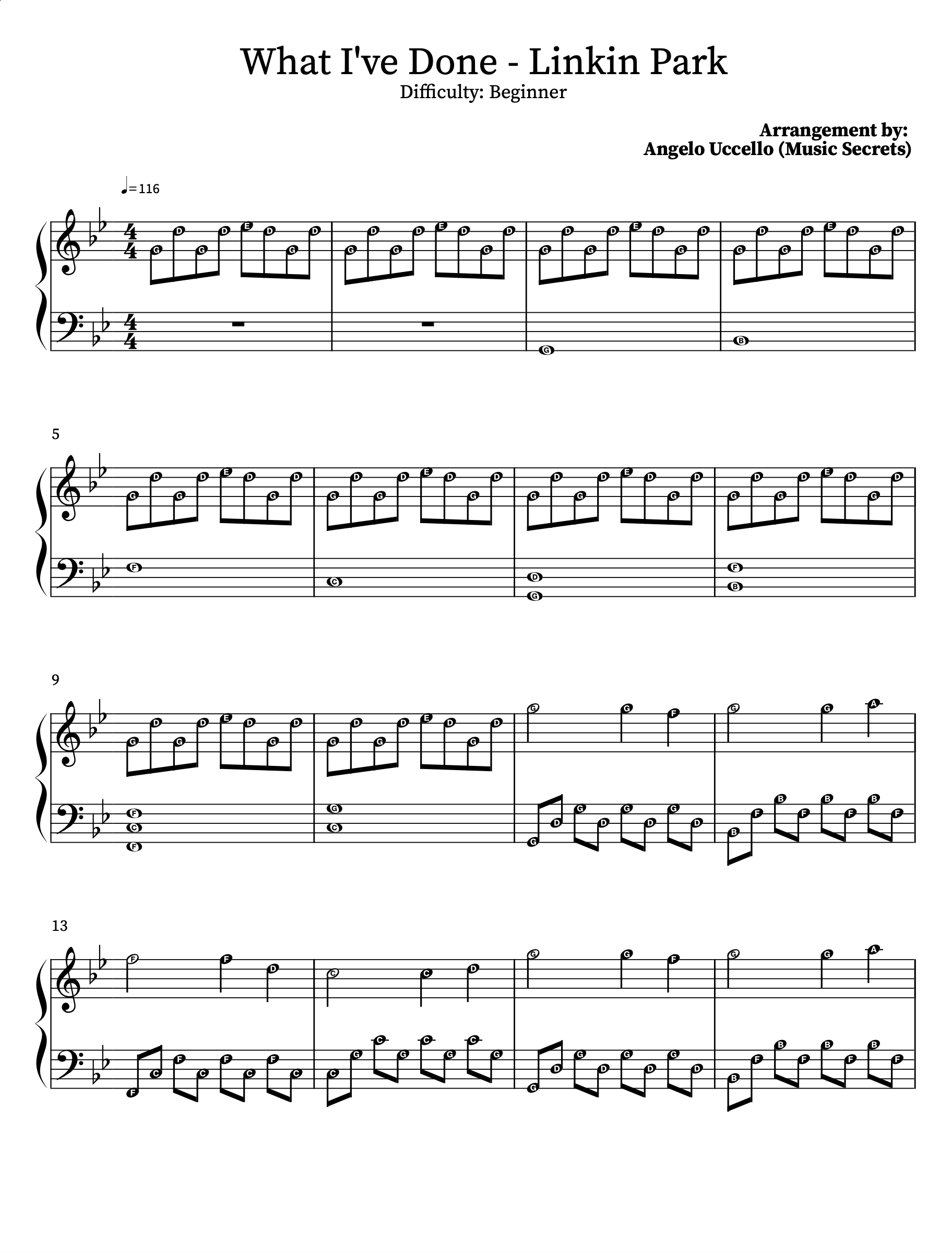
Level - ★★★
The music secrets & transferable skills this song teaches are…
● Roots & Fifth Octaves - & how to transition between them smoothly.
● The easiest way to play a melody.
● How to make learning easier by recognising repeats.
● Left hand revolving patterns.
● Introduction to basic right hand arpeggios.
-
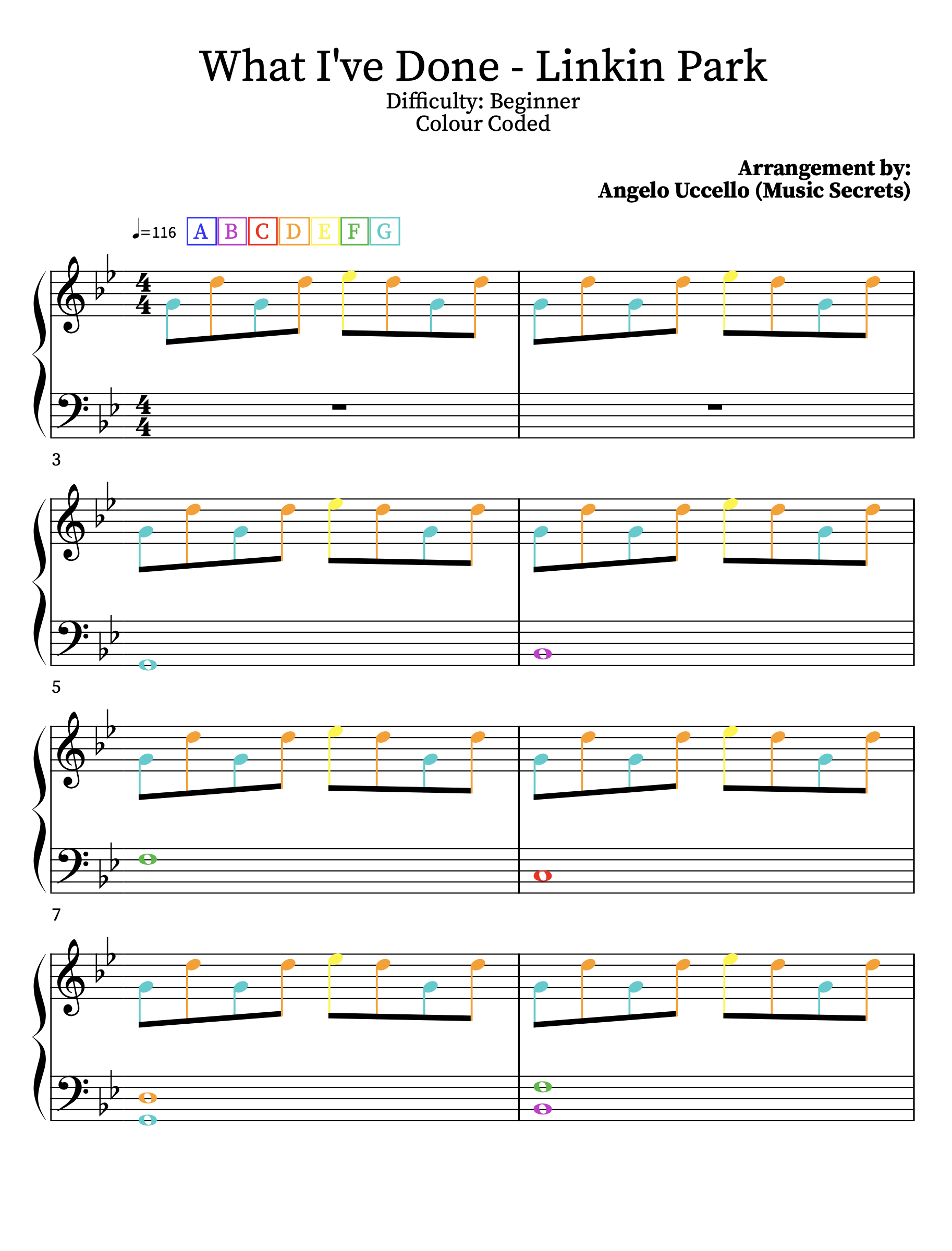
Level - ★★★
The music secrets & transferable skills this song teaches are…
● Roots & Fifth Octaves - & how to transition between them smoothly.
● The easiest way to play a melody.
● How to make learning easier by recognising repeats.
● Left hand revolving patterns.
● Introduction to basic right hand arpeggios.
Music Theory Essentials
Intervals - it’s just a case of counting…
An interval is simply the distance between any two notes. All we have to do to measure that distance is count. Counting along the scale of C Major, we end up with this…
Each number represents that note’s distance from C - D being the 2nd of C, E being the 3rd, F being the 4th, and so on. You’ll also notice how the high C is listed as both 8 and 1. Technically, every C can equally be thought of as a 1 in the key of C Major - but the 8 represents the distance between the high C and the low C. We already know this distance is called an octave - and fundamentally, an octave is a name we give to an interval of an 8th.
Intervals are also used to measure distances that don’t start from the first note of a major scale. And once again, all you need to do is count. Pick two notes you want to measure the distance between - let’s say F & A - and start counting.
That’s it. Just by counting, we can easily see that A is the 3rd of F. If we were to see these two notes together on a piece of sheet music, all we’d have to do is count the spaces and lines from the first note to the last. For F & A, that process would look like this…
It doesn’t matter which two notes you’re trying to measure the interval between, it’s just a case of counting. With that said, I should mention that referring to intervals in terms of 3rds, 6ths, 7ths, and the like isn’t quite specific enough. Along with those numbers, intervals have specific names that give a more detailed measurement. And in order to understand those names, we need to learn about…
Minor Scales - the sad twins’ of majors…
Even if you were born last week, you’ll have heard the terms “major” and “minor” before, and know they relate to music. Well, just like we learnt what a major scale was before, we also have something called a “minor scale” - which is nothing more than a different pattern of notes. And that pattern is…
Tone - Semitone - Tone - Tone - Semitone - Tone - Tone
You follow that pattern from any key on the piano, and you will play the natural minor scale of that key. If we start on A, and follow that pattern, we notice something very peculiar indeed…
That’s correct - A Minor uses all the white notes, just like C Major, meaning they both have the same key signature. And when a major and minor share a key signature, we refer to them as “relatives”. A Minor is the Relative Minor of C Major, and C Major is the Relative Major of A Minor.
Now, because we’ve just learnt about intervals, we’ve got the information we need to know that the 6th interval in a major scale is the relative minor - A being the 6th of C. And we can also see that the 3rd interval in a minor scale is the relative major - C being the 3rd of A.
Now, referring back to what I said before about intervals having specific names that gave a more detailed measurement. If we compare this C Major scale to a C Minor scale, we will understand why that is…
The upper staff shows a C Major scale, and the lower staff a C Minor scale. And immediately, we can see that the 1st, 2nd, 4th, and 5th intervals are the same. The 3rd, 6th, and 7th however are all flattened, and therefore are a semitone closer to C in the minor scale. As a result, these intervals in the major scale are called Major 3rd, Major 6th, and Major 7th; whereas in the minor scale, they’re called Minor 3rd, Minor 6th, and Minor 7th. The 4ths and 5ths carry specific names too. Due to being the same in each scale, they’re known as a “Perfect 4th” and a “Perfect 5th”. Even though the 2nd is the same in both, that is simply called a Major 2nd.
How to construct chords…
A chord is a name given to a group of 3 or more notes played together. The collective name for chords featuring 3 notes is a “triad”. You don’t have to remember the shapes and notes that make up each individual triad - you just have to remember 1 formula, and you will be able to play 24 chords. How’s that possible? Simple - all you have to do is count.
You can pick any note on the piano as your starting note - but for the purposes of this example, let’s go with C. From here, all we need to do is count 4 semitones, and place a finger. From there, count 3 semitones, and place another finger. These three notes played together - which if you started from C, should be C, E, and G - make a C Major chord. And if you wanted to construct a minor chord instead, all you’d need to do is count 3 semitones first, and then 4. If you’d have done that starting from C, you’d have C, E Flat, and G.
When we take this information and combine it with what we learnt about intervals, we can see that both major and minor triads feature a 1st, a 3rd, and a 5th - but the major chord uses a major 3rd, and the minor chord uses a minor 3rd. The 3rd is very much the definitive note in major and minor chords.
The formula for constructing major and minor triads is transferable to all the notes on the piano, and utilising it will see you create chords in what’s known as their “root position”. The “root” of a chord is the note that gives the chord its name. C is the root of both C Major and C Minor. And when a chord is in its root position, that means the root is the lowest pitched note in that chord. But what if you swapped the notes around? Well, then you’d be entering the world of…
Chord Inversions…
Any chord that is not in its root position is inverted. So how do we invert a chord? Take the C Major we’ve just played in its root position, and replace the lowest note in the chord - C - with the C in the octave above. We’ve just created the 1st Inversion - with the notes now in the order E, G, and C on top. If we repeat that process with the new lowest pitched note in the chord - taking the low E and replacing it with the E in the octave above - we create the 2nd Inversion, with the notes now in the order G, C, and E on top. And if we repeat that process for a 3rd time - replacing the low G with one in the octave above - we end up back in the root position, an octave higher than where we started.
You don’t have to remember the shapes of all the chords in each position - you just have to understand how chords are constructed and inverted, and that unlocks possibility in the instrument. The whole reason chord inversions are important is because it makes transitions between chords so much easier and more professional sounding. Speaking of transitioning between chords…
Chord Progressions…
When you travel from one chord to another, that’s known as a chord progression. In popular western music, typically - though not universally - a chord progression will consist of 4 different chords. When you arrive at the last chord in that sequence, you go back to the first, and repeat the whole thing. In order to build a chord progression, and transition between chords knowing they’ll all make musical sense, you need to combine your knowledge of key signatures, major scales, minor scales, intervals, how to construct chords, and chord inversions.
Each note in a major scale can be used as the root of a triad that fits within that key. So, in the key of C Major, where there are no sharps or flats in its key signature, the chords we form from each of these roots must not use any black notes. Each progression is numbered just like intervals - except that instead of numbers, we use Roman Numerals to help you distinguish between major and minor chords: capital letters denoting major chords, and lower case letters denoting minor chords. Ascending up the major scale, each in its root position would look like this…
As we can see, the I, IV, & V are all major; the ii, iii, vi are all minor; which leaves a little curio in the vii position. This chord is neither major nor minor - it’s a “diminished” chord. Unlike major and minor chords, where the 3rd is the definitive note, the note that really outlines a diminished chord is its 5th. It uses an interval known as a diminished 5th that’s a semitone closer to its root than a perfect 5th. Hence, it gives the diminished chord its name and signature feel, with the small circle symbol you see next to the vii being the identifying mark of a diminished chord.
So, to construct a chord progression, all we need to do is pick 4 of these chords, and loop them. We’ll start with a progression that you’ll already unconsciously know - I, V, vi, IV. When playing chords with the right hand, we tend to play octaves of the same name with the left hand. So when you play a C chord, we tend to play a C octave on the bass. If we were to play our chords in their root positions, we’d not only have a couple of large transitions to navigate, but it also wouldn’t sound all that professional. This is where chord inversions come in - because no matter which inversion of C Major we start at, inversions of the chords we want to travel to will be nearby. And to work out which inversions are best, all we have to do is look at the common notes.
Looking at the notes on the score above, we can see that the I and the V - which in this case are C Major & G Major - have 1 common note in G, so the finger that we place on G we don’t need to move. The other two notes in G Major - the B and D - are themselves only one degree lower than the other two notes in the C Major, C and E. So we would have no reason to play B and D up high when there’s a B and D right next to the C and E in the C Major. So, we transition from C Major in its root position to G Major 1st Inversion.
The V and the vi have no common notes - but because they are so close, you can keep your hand in the same shape and just move it up until you’re playing C, E and A for A Minor 1st Inversion. From there, the transition to the IV requires altering merely a single note - given that A Minor and F Major have two notes in common, A and C. All you need to do is keep your hand in the same position, and swap the E for an F. Then you’re playing C, F, and A - F Major 2nd Inversion. To get back to C Major in its root position, all you need to do is move two notes down - F and A down to E and G - and keep the C where it is.
This is just one example of how inversions make transitions easier starting from a root position chord. No matter which inversion you start from however, and no matter which chords you use in your progression, an inversion of the chord you want to travel to will be nearby. The more experience you gain, the easier it will be to recognise inversions wherever they may be.
Now you’ve learnt 9 critical music theory topics, it’s time to introduce to you something which acts as a bit of a cheat code to music. And that aforementioned “something” is…
The Circle of 5ths…
You’re probably wondering why I didn’t just show you the circle of 5ths to begin with if it’s such a cheat code. It’s a bit like learning to add up when you were a kid; you had to learn to do it properly, and understand what was going on, before they’d let you use a calculator. And the circle of 5ths is very much a calculator for music. For locked within this ring are shortcuts for key signatures, constructing chords, relative minors, and chord progressions.
As we can see, around the outside of the circle are red notes, and on the inside green notes. Travelling clockwise, each note is separated from the one before it by an interval of a 5th; travelling anticlockwise (counterclockwise), each note is separated from the one before it by an interval of a 4th. Each of the red notes relates to the root of a major chord, and a major key; each of the green notes directly underneath them is their relative minor. Every time you travel a 5th from C in the clockwise direction, the key signature gains a sharp; each time you travel a 4th from C in the anticlockwise (counterclockwise) direction, the key signature gains a flat.
If we were to divide the circle up like this…
…we find the roots to all of the chords playable in the key of C Major, excluding the diminished. The red notes - C, F, and G - are the roots of major chords; the green notes - A, D, and E - are the roots of minor chords. Wherever you transfer this quadrant, the centre red note will be the major key, the green note directly underneath it will be the relative minor key, and the note either side are the roots of chords playable in the key signature.
We can also use the circle of 5ths to construct major and minor chords.
To construct a major chord, start at a red note. Then, go clockwise to the 5th, and then directly underneath that 5th to its relative minor. Following the blue arrows from C, we have a C Major chord.
To construct a minor chord, start at a green note. Then, go directly above it to its relative major, and then to the note that sits a 5th away from where we started. Following the green arrows from C, we have a C Minor chord.
Beginner Sheet Music Continued - In Order of Difficulty
-

Level - ★★★★
The music secrets & transferable skills this song teaches are…
●Roots & Fifth Octaves - & how to transition between them smoothly.
●How to play Root & Fifth as a chord rather than merely in succession.
●The easiest way to play a melody.
●How to make learning easier by recognising repeats.
-
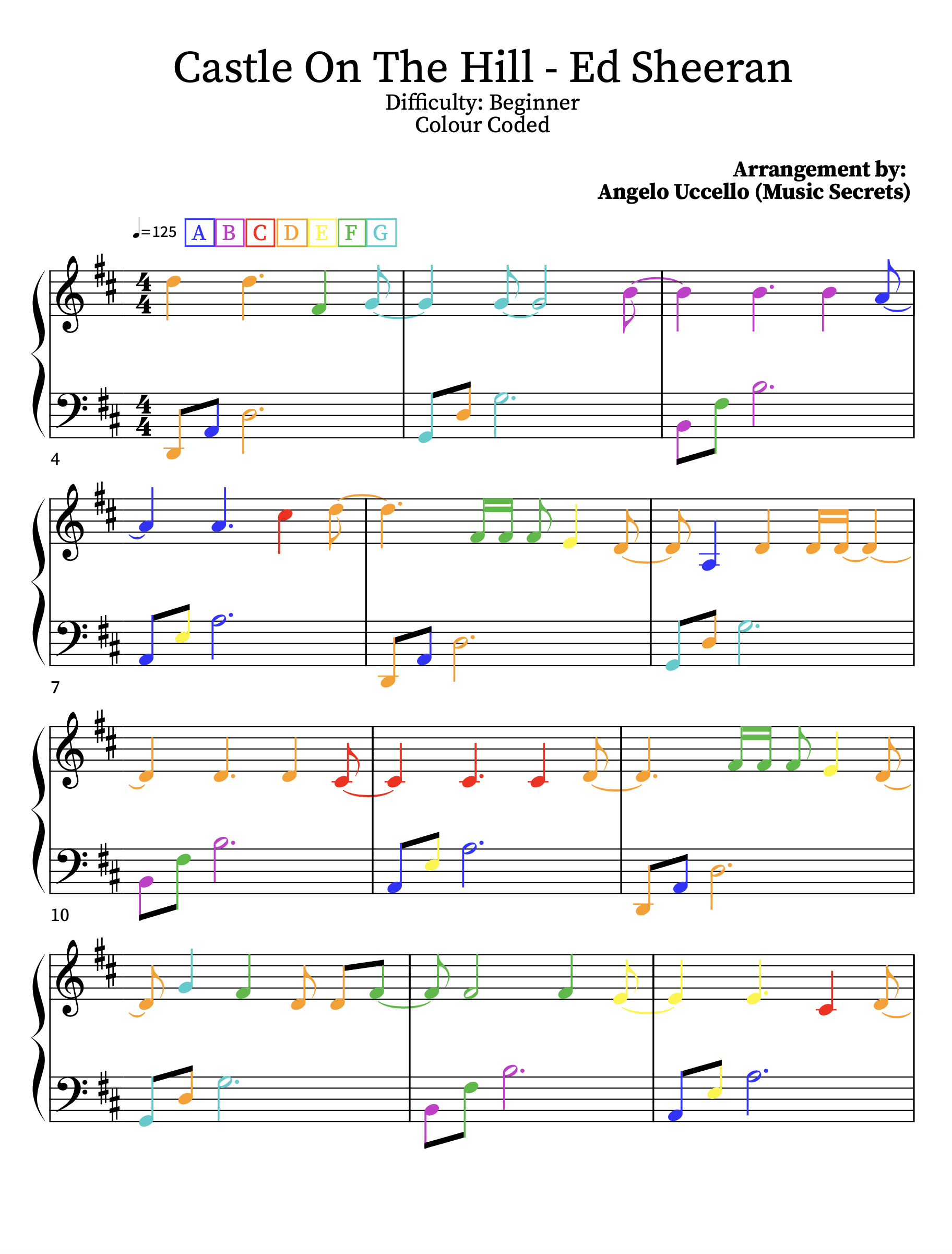
Level - ★★★★
The music secrets & transferable skills this song teaches are…
●Roots & Fifth Octaves - & how to transition between them smoothly.
●How to play Root & Fifth as a chord rather than merely in succession.
●The easiest way to play a melody.
●How to make learning easier by recognising repeats.
-
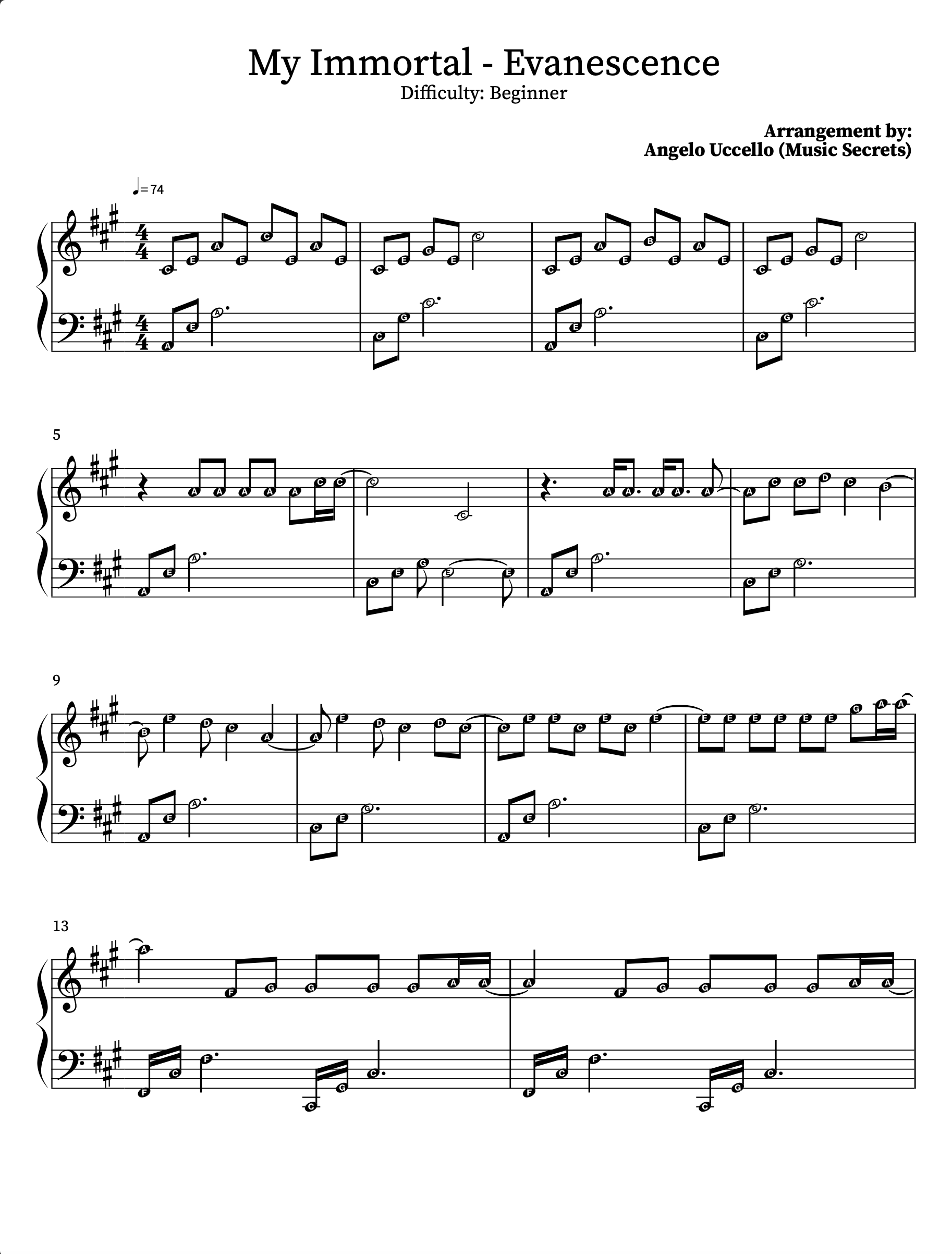
Level - ★★★★
The music secrets & transferable skills this song teaches are…
● Roots & Fifth Octaves - & how to transition between them smoothly.
● The easiest way to play a melody.
● How to make learning easier by recognising repeats.
● How to play basic right hand arpeggios.
-
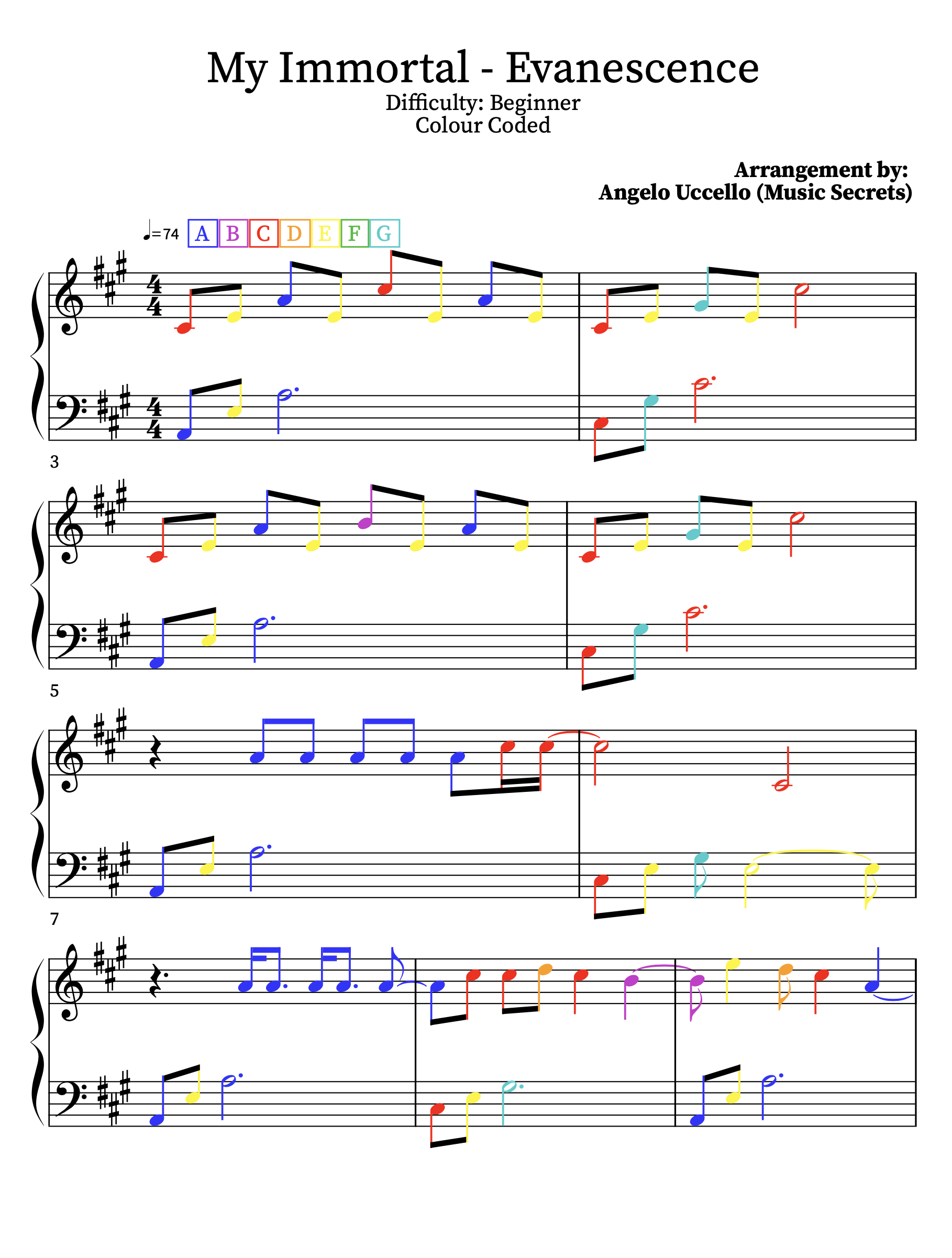
Level - ★★★★
The music secrets & transferable skills this song teaches are…
● Roots & Fifth Octaves - & how to transition between them smoothly.
● The easiest way to play a melody.
● How to make learning easier by recognising repeats.
● How to play basic right hand arpeggios.
-

Level - ★★★★★
The music secrets & transferable skills this song teaches are…
● Roots & Fifth Octaves - & how to transition between them smoothly.
● Playing Root & Fifth as a chord rather than merely in succession.
● The easiest way to play a melody.
● How to make learning easier by recognising repeats.
● How to play and recognise accidentals.
● Introduction to staccato.
-
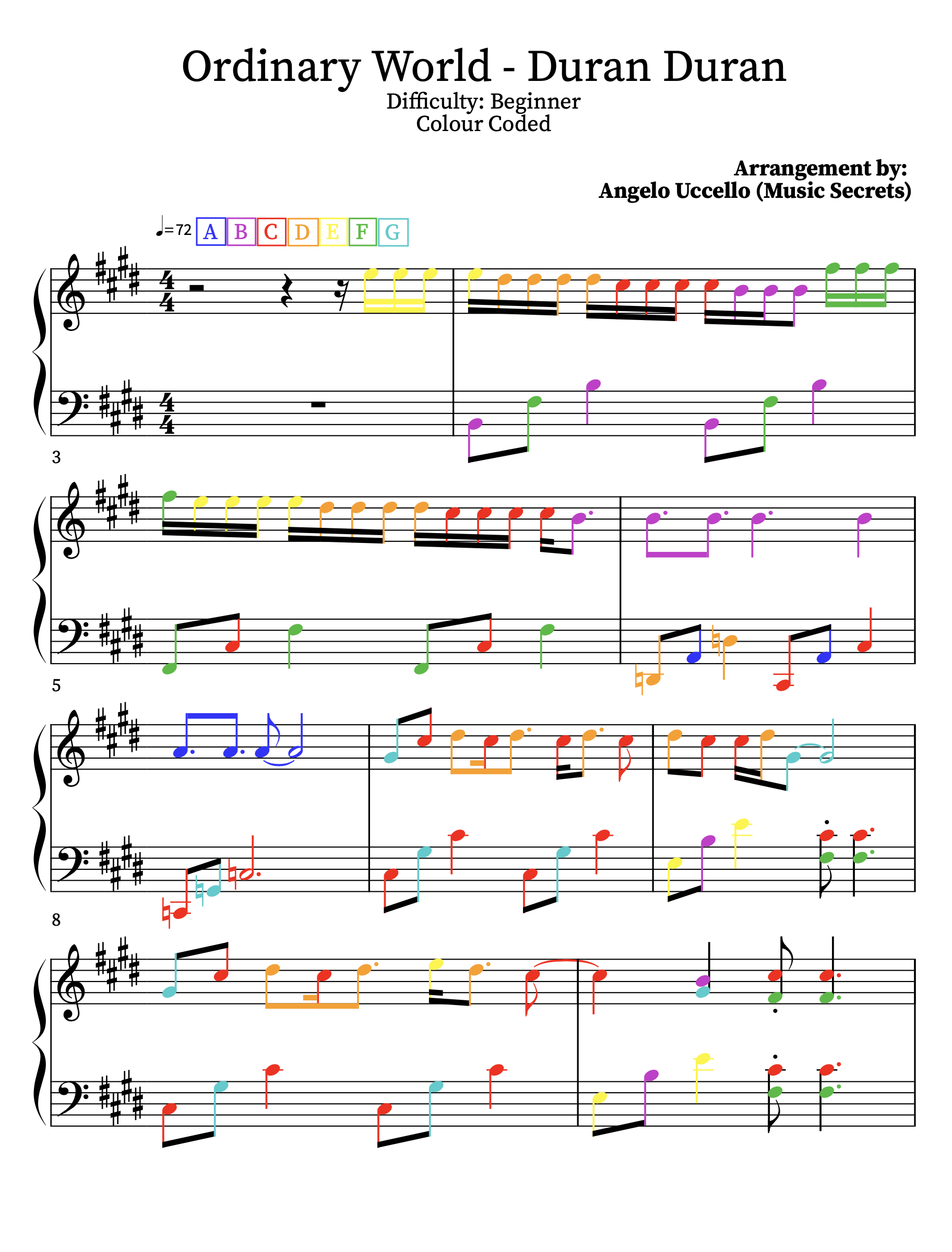
Level - ★★★★★
The music secrets & transferable skills this song teaches are…
● Roots & Fifth Octaves - & how to transition between them smoothly.
● Playing Root & Fifth as a chord rather than merely in succession.
● The easiest way to play a melody.
● How to make learning easier by recognising repeats.
● How to play and recognise accidentals.
● Introduction to staccato.
-
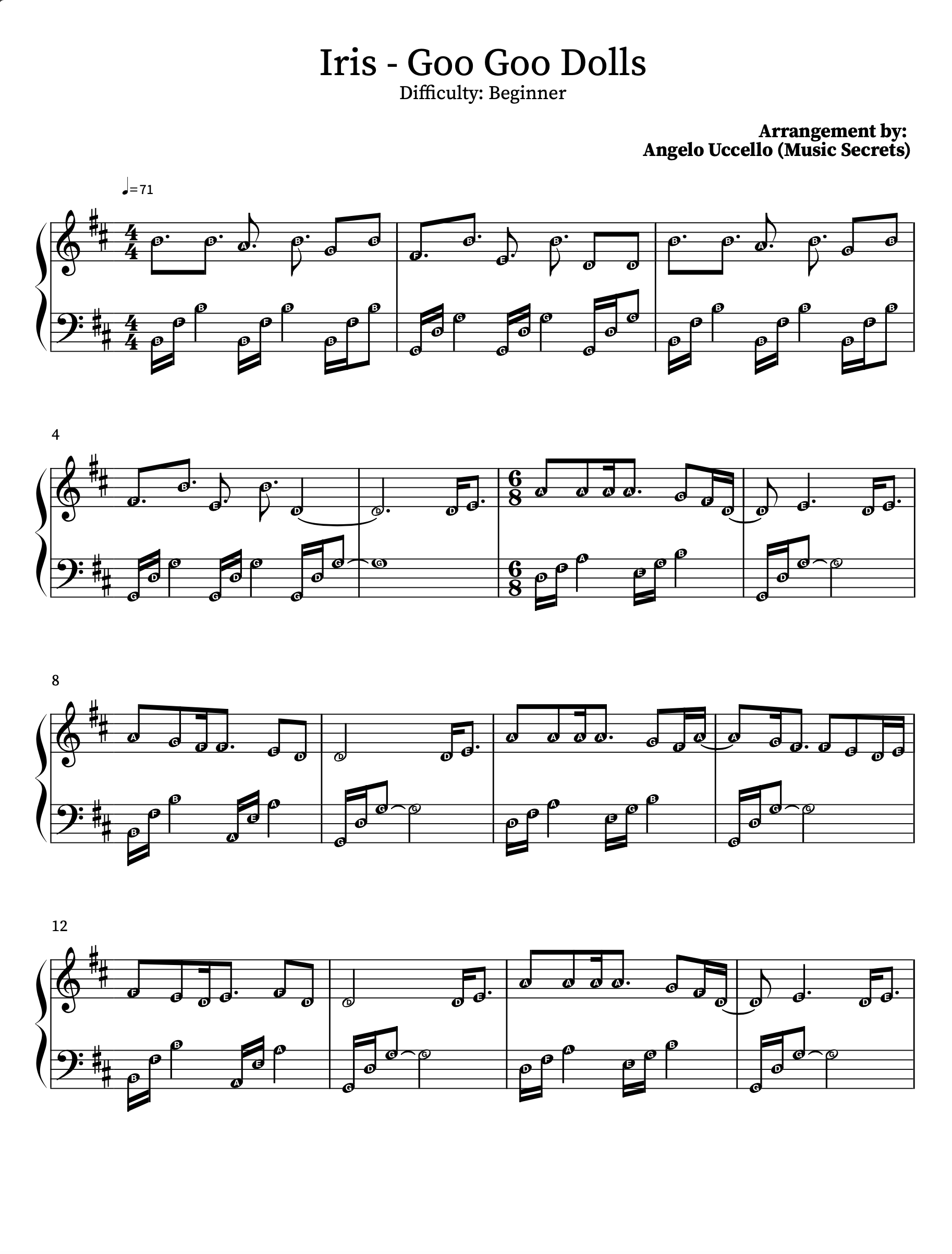
Level - ★★★★★
The music secrets & transferable skills this song teaches are…
● Roots & Fifth Octaves - & how to transition between them smoothly.
● Playing Root & Fifth as a chord rather than merely in succession.
● Left hand revolving patterns while playing a melody.
● Extending the melody beyond a single note using an anchor point.
● How to make learning easier by recognising repeats.
● Transitioning quickly between octaves.
-
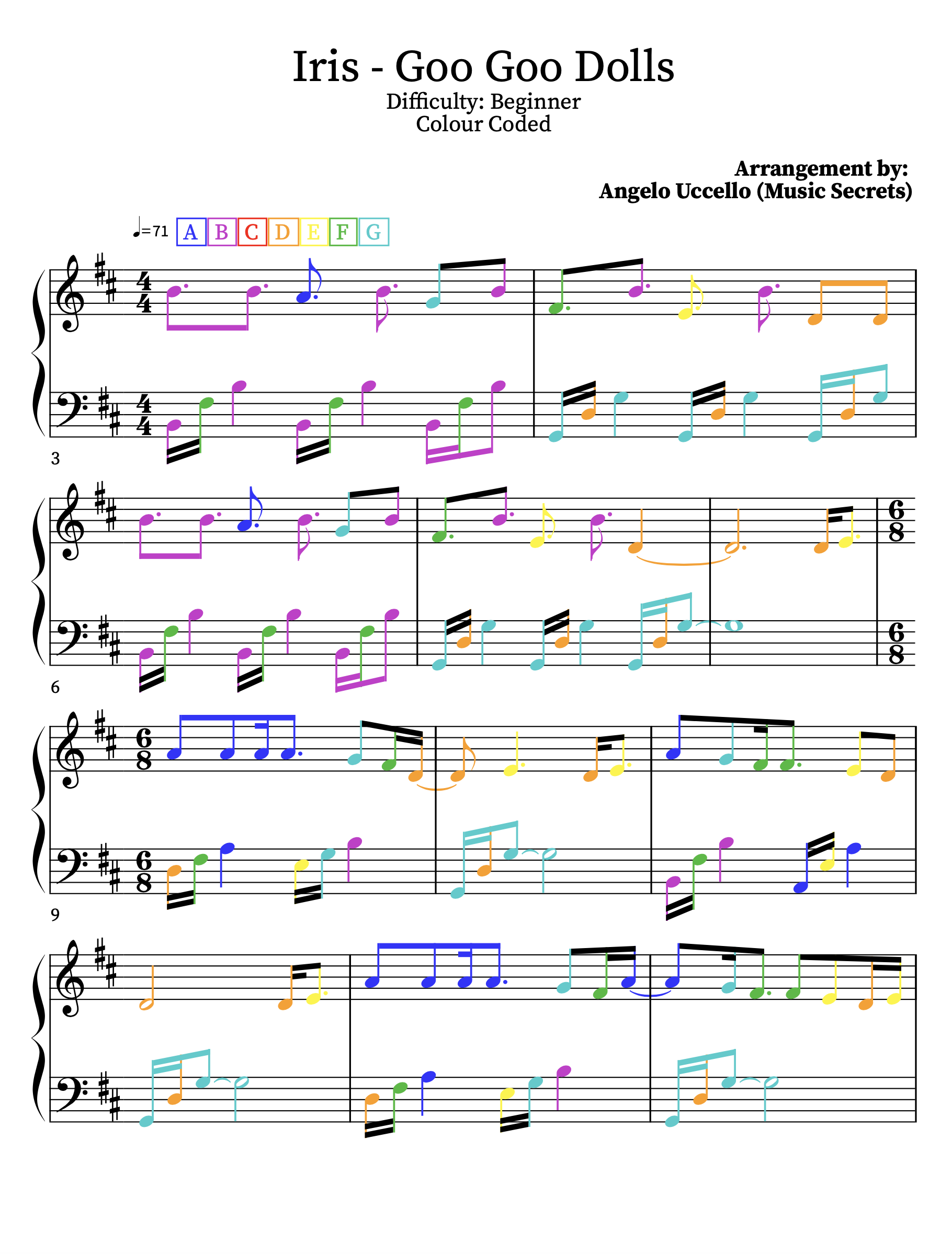
Level - ★★★★★
The music secrets & transferable skills this song teaches are…
● Roots & Fifth Octaves - & how to transition between them smoothly.
● Playing Root & Fifth as a chord rather than merely in succession.
● Left hand revolving patterns while playing a melody.
● Extending the melody beyond a single note using an anchor point.
● How to make learning easier by recognising repeats.
● Transitioning quickly between octaves.
Graduate To Intermediate!
If you’re here at this stage - making the jump from beginner to intermediate - let me first congratulate you for an incredible achievement, and crossing a significant milestone. You’ve laid the foundations, and sewed the seed of a skill that will prove to be a wonderful asset in life.
Now comes the point where you start learning intermediate level songs - a critical step en route to mastery. By following the levels from 1 to 5 as you have with beginner pieces, you will soon find yourself ready to tackle advanced songs. So what are you waiting for? Dive right into our Intermediate Catalogue and start learning more of the songs you love today…